

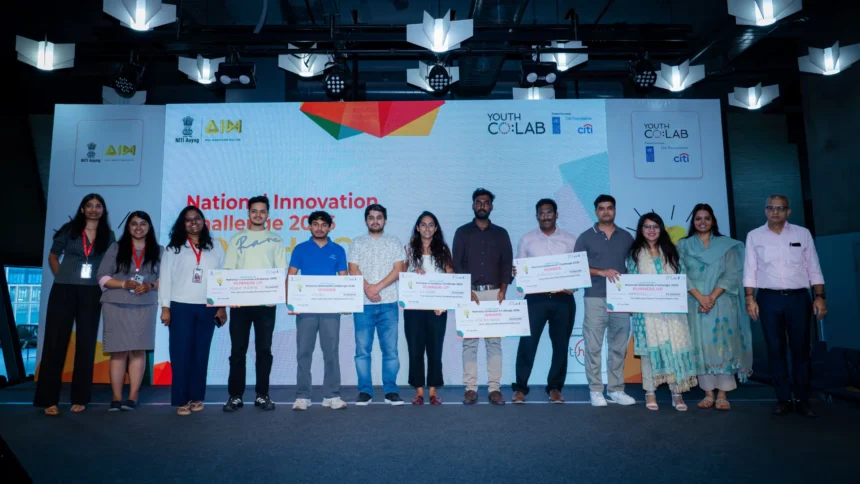
Six youth-led startups from across India have been named winners of the 8th edition of the Youth Co:Lab National Innovation Challenge 2026, recognising innovative solutions that address some of the country’s most pressing sustainability challenges. The initiative focuses on accelerating innovation across the circular economy, sustainable textiles and fashion, and sustainable food systems and water conservation.
- More Than 350 Startups Applied from Across India
- Three Sustainability Themes Took Centre Stage
- Intensive Bootcamp Helped Founders Prepare for Scale
- Six Startups Recognised for High-Impact Innovation
- Industry Leaders Highlight the Importance of Inclusive Innovation
- Addressing India’s Innovation Gap
- Youth Innovation Driving India’s Sustainable Future
- Discussions Focus on Inclusive Innovation and Impact Investing
- Youth Co:Lab Continues to Strengthen India’s Startup Ecosystem
The programme is co-led by UNDP India and the Citi Foundation, in partnership with the Atal Innovation Mission (AIM), NITI Aayog, and implemented by T-Hub Foundation. Over the years, Youth Co:Lab has evolved into one of India’s leading platforms for supporting youth entrepreneurship and advancing the United Nations Sustainable Development Goals (SDGs).
More Than 350 Startups Applied from Across India
The 2026 edition attracted over 350 applications from youth-led startups representing 28 states, highlighting the growing interest in sustainability-driven entrepreneurship across the country.
Following a rigorous evaluation process, 50 promising startups were selected to participate in the National Springboard Programme, a three-month virtual accelerator designed to strengthen business models, improve investment readiness and scale social impact.
Participants received mentorship from 16 industry experts, business leaders and domain specialists, helping founders refine their innovations and prepare for market expansion.
Three Sustainability Themes Took Centre Stage
The challenge focused on three high-impact sectors critical to India’s sustainable development agenda:
- Sustainable Textiles and Fashion
- Circular Economy Innovations
- Sustainable Food Systems and Water Conservation
The selected startups presented their solutions before an expert jury during the National Innovation Dialogue held on 4 June 2026.
Following the presentations, the top 20 ventures advanced to the Regional Immersion Bootcamp hosted at T-Hub, Hyderabad, between 15 and 19 June 2026.
Winners: NavaPrayoga Labs LLP (Grassip), UnBubble and Ecorenowa Solutions Pvt. Ltd.
Intensive Bootcamp Helped Founders Prepare for Scale
The five-day programme brought together investors, government representatives, sustainability experts, entrepreneurs and ecosystem leaders through:
- Masterclasses
- One-on-one mentoring sessions
- Industry site visits
- Peer learning workshops
- Business model refinement sessions
The initiative was designed to help startups strengthen their commercial strategies while expanding their social and environmental impact.
Six Startups Recognised for High-Impact Innovation
Following the final jury evaluation on 18 June 2026, six startups were selected for demonstrating scalable solutions capable of creating meaningful environmental and social impact.
Winners
- NavaPrayoga Labs LLP (Grassip)
- UnBubble
- Ecorenowa Solutions Pvt. Ltd.
Each winning startup received a seed grant of ₹3.5 lakh, along with continued mentorship, ecosystem access and business development support.
Runners-Up
- Eco Cushion
- Vasudeva Innovations
- WomenasticCO
The runners-up were awarded ₹2.2 lakh each in recognition of their innovation and growth potential.
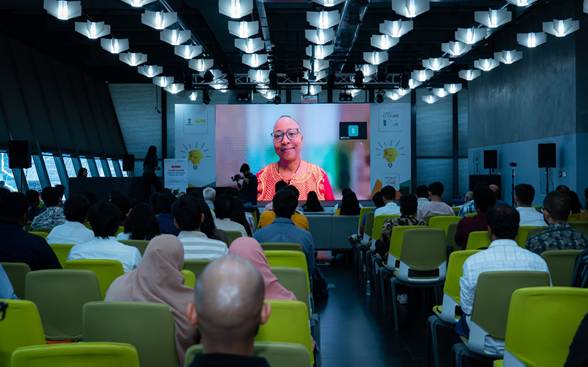
Industry Leaders Highlight the Importance of Inclusive Innovation
The awards ceremony brought together senior representatives from UNDP India, Atal Innovation Mission, T-Hub, government institutions, investors and innovation ecosystem partners.
Delivering the keynote address on “Building India’s Green Economy: Youth, Capital and the Next Decade of Innovation,” Meraj Faheem, CEO of Telangana Innovation Cell (TGIC), said:
“Initiatives like Youth Co:Lab reinforce the power of innovation, collaboration, and youth leadership in addressing some of our most pressing challenges. We are proud to have been part of this journey and remain committed to nurturing ecosystems that enable young changemakers to transform ideas into meaningful impact.”
Addressing India’s Innovation Gap
Speaking during the event, Prateek Deshmukh, Program Director, Atal Innovation Mission, NITI Aayog, emphasised the importance of improving access to capital, mentorship and opportunities across the country.
“India does not have a startup problem. India has a distribution problem. A distribution of capital — too concentrated in Bangalore and Delhi. A distribution of mentorship — too thin in Tier-3 and the North-East. A distribution of opportunity — too narrow for women, persons with disabilities, and founders from socially disadvantaged backgrounds. Programmes like Youth Co:Lab exist to fix that distribution problem. And the evidence we are unveiling today suggests they are starting to.”
Youth Innovation Driving India’s Sustainable Future
Highlighting India’s demographic advantage, Dr. Angela Lusigi, Resident Representative, UNDP India, said the country’s young entrepreneurs will play a central role in achieving national development and climate goals.
“One of India’s greatest resources is its youth dividend. With nearly 65 percent of the population under the age of 35, the country’s ability to meet its development and climate goals will depend on how effectively we support young innovators to turn ideas into action. More than 350 startups stepped forward with solutions to some of the most pressing challenges of our time, from waste and water scarcity to unsustainable production systems. More than 40 percent of the selected ventures are women-led, demonstrating the diversity of talent driving India’s innovation ecosystem. With the support of our partners, we are proud to invest in a generation that is actively building a better future.”
Discussions Focus on Inclusive Innovation and Impact Investing
The event also featured two panel discussions exploring the future of India’s innovation ecosystem.
The first session, “Inclusion as Infrastructure: Building Innovation Ecosystems That Work for Everyone,” examined how inclusive policies and ecosystem collaboration can help underrepresented founders succeed.
A second panel, “Betting on Youth: What Investors and Institutions Look for in the Next Generation of Impact Founders,” explored investment trends, startup readiness and the growing importance of sustainability-focused entrepreneurship.
Youth Co:Lab Continues to Strengthen India’s Startup Ecosystem
Since its launch in 2017, Youth Co:Lab has empowered thousands of young entrepreneurs across the Asia-Pacific region by promoting leadership, social innovation and entrepreneurship aligned with the Sustainable Development Goals (SDGs).
The programme continues to strengthen India’s innovation ecosystem by connecting founders with investors, mentors, government institutions and industry leaders while helping develop scalable businesses capable of creating lasting environmental and social impact.
Useful Links
- Youth Co:Lab: https://www.youthcolab.org
- UNDP India: https://www.undp.org/india
- Atal Innovation Mission (AIM): https://aim.gov.in
- Citi Foundation: https://www.citifoundation.com
- T-Hub: https://t-hub.co
AI Coding Costs Could Overtake Developer Salaries by 2028—Here’s Why It Matters