
12 October 2026, South Korea – Peak Energy and the Vencore Rooftop Equity Fund, associated with Hyundai Motor Securities, have launched a joint venture to expand renewable energy solutions across South Korea’s automotive supply chain.
The initiative aims to help domestic original equipment manufacturer (OEM) suppliers manage electricity costs, reduce exposure to energy price volatility and strengthen manufacturing competitiveness. It will also support efforts to reduce carbon emissions across the automotive value chain.
The partnership comes as manufacturers face uncertainty in export markets, rising global trade risks and pressure on operating margins. Long-term solar power purchase agreements (PPAs) offer energy-intensive suppliers an opportunity to secure renewable electricity with greater visibility into future power costs.
The joint venture will initially focus on energy-intensive suppliers within Hyundai’s OEM supply chain, with plans to extend the model to additional manufacturing sites across South Korea.
Five Solar Projects Secured With 13 MW Combined Capacity
The joint venture has secured five projects involving major Tier-1 suppliers to Hyundai Motor, representing a combined capacity of 13 MW.
The initial projects will serve manufacturers producing key components for domestic automotive companies, providing a starting point for the partnership’s wider rollout.
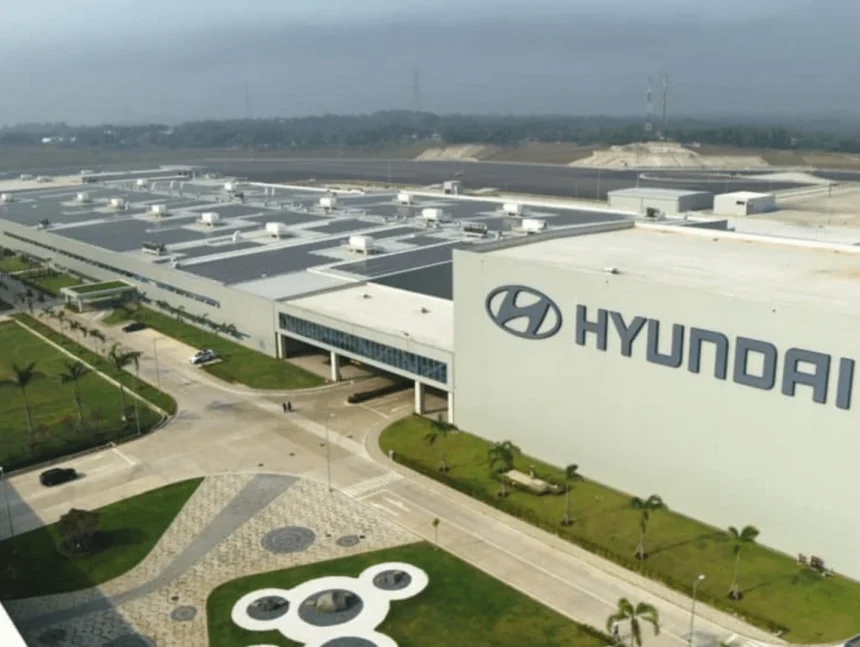
The partners intend to expand the initiative across hundreds of supplier locations nationwide, with a long-term target of developing 100 MW of industrial rooftop solar capacity.
By using rooftop space at industrial facilities to generate renewable electricity, the initiative aims to help participating suppliers reduce dependence on conventional power sources and improve their exposure to long-term energy pricing.
Rooftop Solar to Support Automotive Supply Chain Decarbonisation
Automotive manufacturers face growing pressure to address emissions beyond their own factories. Scope 3 emissions include indirect emissions across a company’s value chain, including those associated with suppliers.
The joint venture is designed to help address this challenge by increasing access to renewable electricity among energy-intensive suppliers in Hyundai’s supply chain.
According to the announcement, the planned 100 MW rooftop solar rollout could avoid approximately 55,000 tonnes of carbon dioxide emissions annually. Cumulative avoided emissions over the assets’ lifetime could exceed one million tonnes.
These figures represent projected environmental benefits associated with the potential rollout rather than emissions reductions already achieved by the five initial projects.
Peak Energy Brings Regional Renewable Energy Experience
Peak Energy contributes renewable energy development and operational experience to the partnership. The company has more than 300 MW of operating assets across the Asia-Pacific region, including more than 200 MW operating or approaching operation in South Korea.
Backed by alternative investment firm Stonepeak, Peak Energy also brings project development expertise, financial support and experience structuring long-term renewable energy agreements for industrial customers.
The partnership is intended to combine these capabilities with financing structures and project execution expertise to make solar PPAs more accessible to domestic automotive suppliers.
Long-Term Solar PPAs Aim to Improve Cost Visibility
Electricity costs can influence manufacturing margins, particularly for businesses with energy-intensive production processes. Price volatility can also complicate long-term operational planning.
Solar PPAs provide a framework through which businesses can purchase renewable electricity under agreed contractual terms, potentially improving visibility into future energy expenses.
Gavin Adda, CEO of Peak Energy, said electricity pricing has become an increasingly important factor in industrial competitiveness. He highlighted the joint venture’s potential to provide Hyundai’s OEM suppliers with greater visibility into power costs while advancing supply chain decarbonisation.
Adda also noted that the five initial projects indicate progress towards implementation of the model.
A representative from Hyundai Motor Securities’ Infrastructure Investment Division said the partnership aims to combine competitive financing structures with project execution capabilities, supporting reliable and sustainable solar PPA adoption among domestic suppliers.
What the Partnership Means for South Korea’s Automotive Industry
The initiative reflects the growing intersection of renewable energy investment, industrial competitiveness and corporate emissions management.
For automotive suppliers, rooftop solar PPAs could provide a route to accessing renewable electricity without requiring every manufacturer to develop its own energy projects independently. For the wider automotive value chain, broader supplier participation could help address indirect emissions associated with manufacturing operations.
The planned expansion from five projects with 13 MW of combined capacity towards a 100 MW portfolio will depend on project execution, supplier participation and the development of additional sites.
Conclusion
Peak Energy and Hyundai Motor Securities’ joint venture aims to expand industrial rooftop solar across South Korea’s automotive supply chain, beginning with five projects representing 13 MW. With a long-term target of 100 MW, the initiative seeks to improve suppliers’ energy cost visibility, strengthen manufacturing competitiveness and support emissions reduction across the automotive value chain.
This article is based on the supplied announcement. The 100 MW capacity and associated emissions reductions are stated targets and projections, not confirmed outcomes.