
Panasonic Holdings has announced plans to invest JPY 350 billion (approximately US$2 billion) to significantly expand its battery manufacturing capacity, positioning itself to capitalize on the rapidly growing demand for power and energy storage solutions driven by artificial intelligence (AI) data centers.
- Expanding Battery Manufacturing Across Japan, the U.S., and Mexico
- AI Data Centers Create New Growth Opportunities
- Advanced Capacitor Backup Units (CBUs)
- High-Voltage Battery Backup Systems
- Next-Generation Lithium-Ion Batteries
- Ambitious Revenue Targets for Energy Solutions Business
- Strategic Shift Toward High-Growth Energy Markets
- Continued Innovation in Grid-Scale Energy Storage
- AI Infrastructure Driving New Energy Investments
The investment plan was unveiled during Panasonic’s Investors Day event in Tokyo on June 8, where the company outlined a long-term strategy focused on strengthening battery production capabilities across Japan and North America while targeting the fast-growing AI infrastructure market.
The move reflects a broader industry trend as technology companies, cloud providers, and data center operators invest heavily in infrastructure capable of supporting increasingly power-intensive AI workloads.
Expanding Battery Manufacturing Across Japan, the U.S., and Mexico
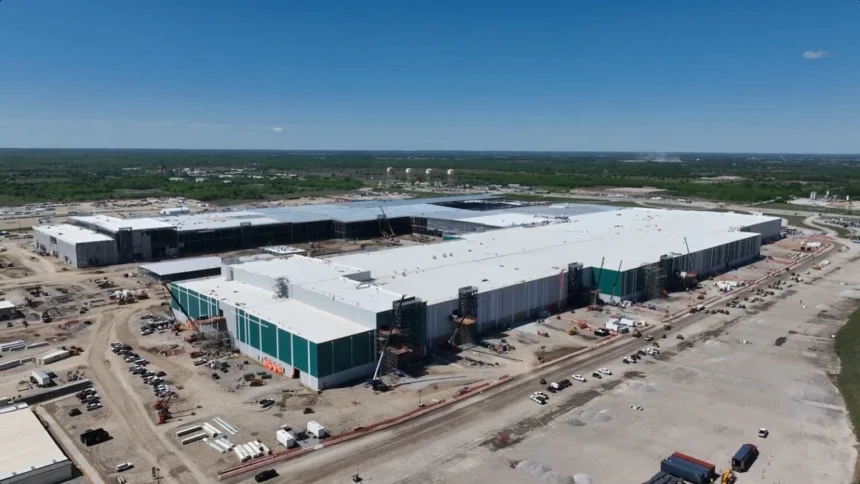
As part of its expansion strategy, Panasonic will introduce a dedicated battery production line for data center applications at its battery cell manufacturing facility in Kansas, United States.
The company also plans to:
- Complete its second and third battery module manufacturing facilities in Mexico
- Triple battery cell production capacity in Japan by fiscal year 2029
- Repurpose an existing vehicle battery production line in Osaka to manufacture lithium-ion batteries and supercapacitors
- Strengthen domestic and North American battery supply chains
These investments are designed to support growing demand for energy storage systems and backup power solutions required by next-generation AI data centers.
AI Data Centers Create New Growth Opportunities
The rapid expansion of artificial intelligence is placing unprecedented pressure on power infrastructure globally.
AI data centers require significantly higher energy consumption than traditional computing facilities due to the intensive processing demands of large language models, machine learning systems, and AI training clusters.
To address these challenges, Panasonic is developing specialized products designed specifically for AI data center environments.
According to company presentations, future offerings will include:
Advanced Capacitor Backup Units (CBUs)
These high-capacity capacitors provide rapid bursts of power that help stabilize voltage during sudden load fluctuations, a common challenge in AI computing environments.
High-Voltage Battery Backup Systems
Panasonic is designing battery backup units optimized for high-voltage direct current (HVDC) architectures increasingly being adopted by hyperscale data center operators.
Next-Generation Lithium-Ion Batteries
The company is also investing in the development of high-power lithium-ion battery cells capable of supporting demanding AI workloads and large-scale energy storage requirements.
Ambitious Revenue Targets for Energy Solutions Business
Panasonic expects the growing AI infrastructure market to become a major revenue driver over the coming years.
The company has set a target of nearly JPY 1 trillion (approximately US$6.25 billion) in revenue from data center-related energy storage systems by fiscal year 2029.
To support profitability, Panasonic is also targeting a return on invested capital (ROIC) exceeding 20% within its energy solutions business segment.
The ambitious targets underscore the company’s confidence in the long-term growth prospects of AI-driven infrastructure investments.
Strategic Shift Toward High-Growth Energy Markets
The latest announcement follows Panasonic’s strategic decision to exit the residential solar and energy storage market in the United States.
In 2025, the company announced plans to wind down its residential solar and energy storage business while continuing to support existing customers through warranty and installation services.
Instead, Panasonic has shifted its focus toward higher-growth segments including:
- Electric vehicle battery manufacturing
- AI data center power infrastructure
- Grid-scale energy storage systems
- Advanced battery technologies
The company’s battery manufacturing facility in Kansas remains a key component of its North American expansion strategy.
Continued Innovation in Grid-Scale Energy Storage
Beyond data centers, Panasonic continues to invest in technologies supporting the broader energy transition.
In March 2026, the company completed a cybersecurity trial focused on monitoring grid-scale Battery Energy Storage Systems (BESS), highlighting its efforts to improve the reliability, security, and performance of large-scale energy infrastructure.
As renewable energy adoption increases globally, battery storage systems are expected to play a critical role in balancing electricity supply and demand while enhancing grid resilience.
AI Infrastructure Driving New Energy Investments
Industry analysts expect global AI infrastructure spending to continue rising sharply over the next decade as organizations deploy larger AI models and expand computing capacity.
This trend is creating significant opportunities for battery manufacturers, energy storage providers, and power infrastructure companies.
Panasonic’s $2 billion investment demonstrates how traditional electronics and battery manufacturers are repositioning themselves to serve the growing demands of the AI economy.
By expanding production capacity and developing specialized energy solutions for AI data centers, the company aims to secure a larger share of one of the fastest-growing segments in the global technology and energy markets.