

India generates millions of tonnes of organic waste every year, much of which ends up in landfills, contributing to environmental pollution and greenhouse gas emissions. As the country accelerates its transition towards cleaner energy sources and a circular economy, innovative waste-to-energy projects are becoming increasingly important.
- Converting Waste Into Valuable Energy Resources
- Significant Carbon Emission Reductions
- Supporting Sustainable Agriculture Through Bio-Fertilisers
- Leadership Perspective
- Economic Growth and Job Creation
- Building India’s Circular Energy Economy
- Paragon Biofuels Plans ₹500 Crore Investment
- The Future of Waste-to-Energy in India
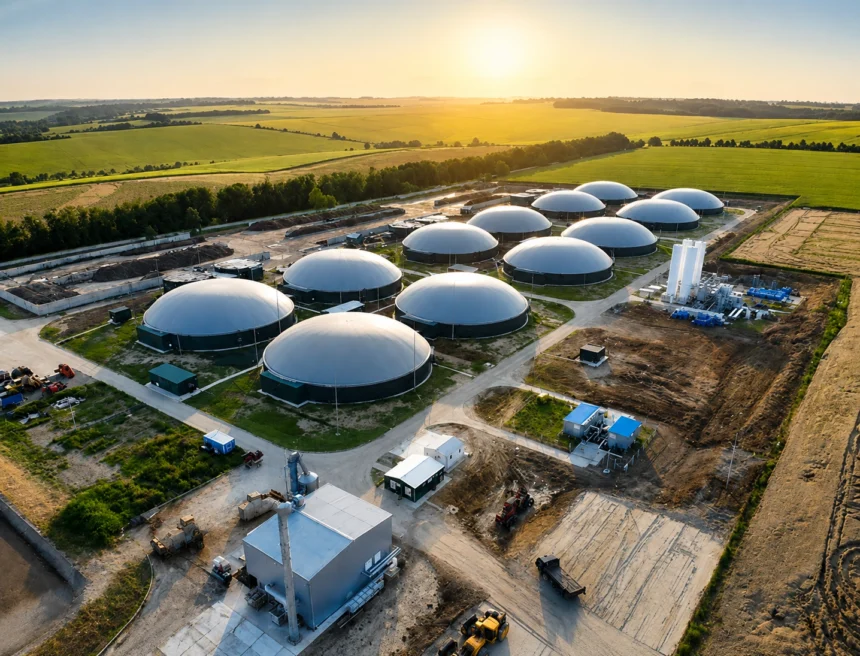
In a significant step towards sustainable energy production, Alchemy Cleantech and Paragon Biofuels have inaugurated the Ankleshwar Bio-CNG Plant, a facility designed to convert organic waste into clean fuel and bio-fertilisers while reducing carbon emissions and supporting local economic development.
Converting Waste Into Valuable Energy Resources
The Ankleshwar Bio-CNG Plant has been developed to process approximately 43,800 tonnes of organic waste annually. Through advanced waste-to-energy technologies, the facility will convert this waste stream into approximately 2,373 tonnes of Compressed Bio-Gas (CBG) every year.
Compressed Bio-Gas is increasingly being viewed as a sustainable alternative to conventional fossil fuels and compressed natural gas (CNG), helping reduce dependence on imported energy while supporting India’s renewable energy ambitions.
The project demonstrates how organic waste can be transformed from an environmental challenge into a valuable resource that contributes to energy security and sustainability.
Significant Carbon Emission Reductions
One of the key environmental benefits of the Ankleshwar Bio-CNG Plant is its contribution to reducing greenhouse gas emissions.
According to project estimates, the facility is expected to eliminate approximately 17,000 tonnes of carbon dioxide (CO₂) emissions annually.
This environmental impact is equivalent to saving nearly 7.95 million litres of petrol every year, making the project a meaningful contributor to India’s climate action goals and net-zero ambitions.
As India continues to pursue cleaner energy solutions, projects like Ankleshwar provide a practical pathway to simultaneously address waste management and carbon reduction challenges.

Supporting Sustainable Agriculture Through Bio-Fertilisers
Beyond clean fuel production, the facility will also generate valuable agricultural inputs.
The plant is expected to produce:
- 7,300 tonnes of solid Fermented Organic Manure (FOM) annually
- 27,375 cubic metres of liquid Fermented Organic Manure annually
These nutrient-rich bio-fertilisers can help improve soil health, reduce dependence on chemical fertilisers, and support sustainable farming practices.
By creating both renewable fuel and organic fertilisers from waste, the project establishes a complete waste-to-value ecosystem that benefits multiple sectors of the economy.
Leadership Perspective
Commenting on the project, Sushant Arora, Founder of Alchemy Cleantech, said:
“At Alchemy Cleantech, we believe the future of energy lies not in extraction, but in regeneration.”
His statement reflects the growing global shift toward regenerative and circular economic models that focus on resource recovery and sustainable production systems.

Economic Growth and Job Creation
In addition to its environmental benefits, the Ankleshwar Bio-CNG Plant is expected to generate significant economic opportunities.
The project is projected to create:
- Around 50 direct jobs
- Approximately 150 indirect employment opportunities
These indirect jobs will be created through activities such as:
- Waste collection
- Transportation and logistics
- Supply chain services
- Plant support operations
The initiative demonstrates how clean energy investments can contribute to both environmental sustainability and local economic development.
Building India’s Circular Energy Economy
The launch of the Ankleshwar Bio-CNG Plant aligns with India’s broader efforts to develop a circular economy where waste materials are reused, recycled, and converted into productive resources.
With growing urbanisation and increasing waste generation, waste-to-energy projects are emerging as an important component of India’s sustainable development strategy.
These projects help address several challenges simultaneously:
- Waste management
- Clean energy production
- Emissions reduction
- Rural development
- Sustainable agriculture
Paragon Biofuels Plans ₹500 Crore Investment
Looking beyond Ankleshwar, Paragon Biofuels has outlined ambitious plans to expand its presence in the waste-to-energy sector.
Susmit Gupta, Managing Director of Paragon Biofuels, said:
“Waste-to-clean-energy will be one of the defining pillars of India’s energy security over the coming decades.”
To support this vision, the company plans to invest approximately ₹500 crore in developing similar projects across the country.
The investment is expected to accelerate the adoption of Bio-CNG infrastructure while helping transform organic waste into a strategic national resource.
The Future of Waste-to-Energy in India
As India works towards reducing emissions, improving energy security, and promoting sustainable development, Bio-CNG projects are gaining momentum as a viable solution.
Facilities such as the Ankleshwar Bio-CNG Plant highlight how innovation, technology, and circular economy principles can work together to create environmental, economic, and social value.
By converting thousands of tonnes of waste into clean fuel and organic fertilisers every year, the project represents an important step in India’s journey towards a greener, more resource-efficient future.