
Ahmedabad, India: Clean Max Enviro Energy Solutions (CleanMax), one of India’s leading renewable energy companies focused on the commercial and industrial (C&I) sector, has secured a major hybrid renewable energy project aimed at supporting the decarbonisation goals of Gujarat Alkalies and Chemicals Limited (GACL).
- Renewable Energy to Power GACL’s Manufacturing Operations
- Project Spread Across Four Renewable Energy Sites
- Significant Carbon Emission Reduction Impact
- Two-Phase Project Implementation
- Growing Momentum in Industrial Decarbonisation
- CleanMax Expands Renewable Energy Leadership
- ESG and Sustainability Implications
- Outlook
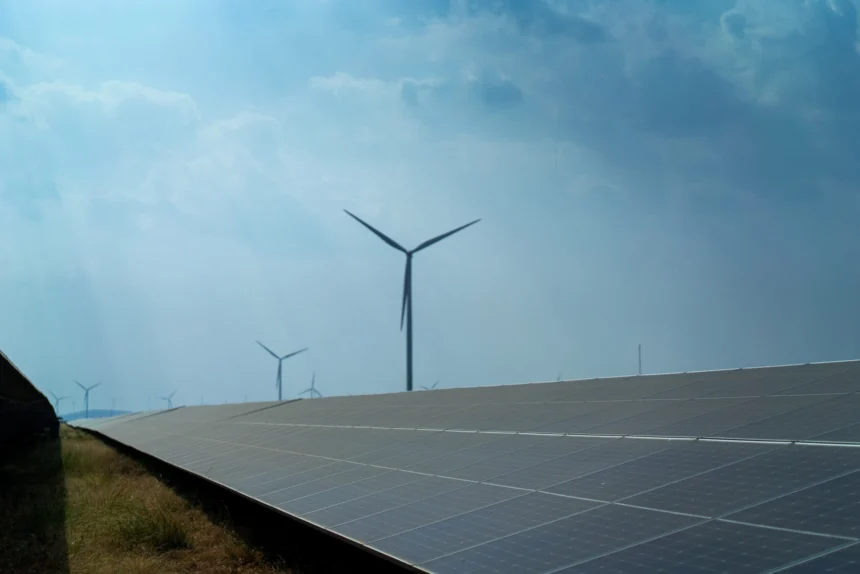
The project will combine 75.90 MW of wind power capacity and 84.34 MWp of solar power capacity, delivering renewable energy to GACL’s manufacturing facilities located in Dahej and Vadodara, Gujarat, through a group captive power model.
The initiative represents another significant step toward reducing carbon emissions in India’s industrial sector while strengthening the adoption of renewable energy among large manufacturing companies.
Renewable Energy to Power GACL’s Manufacturing Operations
Under the agreement, all electricity generated from the hybrid renewable energy facilities will be exclusively utilized by GACL to support its manufacturing operations.
The project is expected to help the chemical manufacturing company reduce its dependence on conventional energy sources while improving the sustainability of its operations.
As industries increasingly align with net-zero commitments and ESG objectives, renewable energy procurement through captive and group captive models is becoming a preferred strategy for achieving long-term sustainability goals.
Project Spread Across Four Renewable Energy Sites
CleanMax will execute the project across four renewable energy locations in Gujarat:
- Kalikanagar
- Aji Dahisarda
- Rajula
- Ghuntu
The distributed structure is designed to optimize renewable energy generation while ensuring a reliable supply of clean power for GACL’s industrial facilities.
Once operational, the project is expected to generate approximately 369 million units (36.9 crore units) of renewable electricity annually.
Significant Carbon Emission Reduction Impact
According to CleanMax, the project is expected to offset approximately 264,204 tonnes of carbon dioxide emissions every year.
The environmental impact is comparable to planting nearly 15.27 million trees annually, highlighting the scale of emissions reduction that renewable energy adoption can achieve within energy-intensive industries.
Industrial decarbonisation remains one of the most critical components of India’s broader climate and sustainability agenda, particularly in sectors with significant energy consumption requirements.
Two-Phase Project Implementation
The renewable energy project will be developed in two phases.
Phase 1
- 16.50 MW wind power capacity
- 21.701 MWp solar power capacity
Phase 2
- 59.40 MW wind power capacity
- 62.64 MWp solar power capacity
Both phases are expected to be commissioned according to the timelines agreed upon by CleanMax and GACL.
The phased approach will enable a gradual integration of renewable energy into GACL’s operational framework while ensuring smooth project execution.
Growing Momentum in Industrial Decarbonisation
The project reflects a broader trend across India’s industrial sector, where companies are increasingly investing in renewable energy to reduce carbon footprints, improve energy security, and manage long-term energy costs.
Hybrid renewable energy systems that combine solar and wind generation are gaining popularity because they offer more stable power generation profiles and improve overall energy reliability.
Such projects also support India’s national targets for renewable energy expansion and carbon emission reduction.
CleanMax Expands Renewable Energy Leadership
CleanMax has established itself as India’s largest pure-play commercial and industrial renewable energy company, serving businesses across multiple sectors through solar, wind, and hybrid energy solutions.
The company recently reported that its contracted renewable energy portfolio reached 5.7 GW during FY2025-26, demonstrating strong growth in demand for clean energy among industrial and commercial customers.
Notably, nearly 74% of the company’s newly contracted renewable energy capacity came from existing customers, reflecting strong client retention and growing confidence in renewable energy solutions.
ESG and Sustainability Implications
For industrial companies, renewable energy projects of this scale offer multiple sustainability benefits, including:
- Lower greenhouse gas emissions
- Improved ESG performance
- Reduced exposure to fossil fuel price volatility
- Progress toward net-zero and sustainability targets
- Enhanced energy security and resilience
As investors, regulators, and customers place greater emphasis on environmental performance, renewable energy adoption is becoming a strategic business imperative rather than simply an operational decision.
Outlook
The CleanMax-GACL partnership highlights the accelerating transition toward renewable energy within India’s manufacturing sector.
With industries increasingly seeking cost-effective pathways to decarbonisation, hybrid renewable energy projects are expected to play a vital role in helping companies meet sustainability commitments while supporting India’s broader clean energy ambitions.
As CleanMax continues expanding its renewable energy portfolio and industrial partnerships, projects like this are expected to contribute significantly to India’s energy transition and long-term climate goals.