

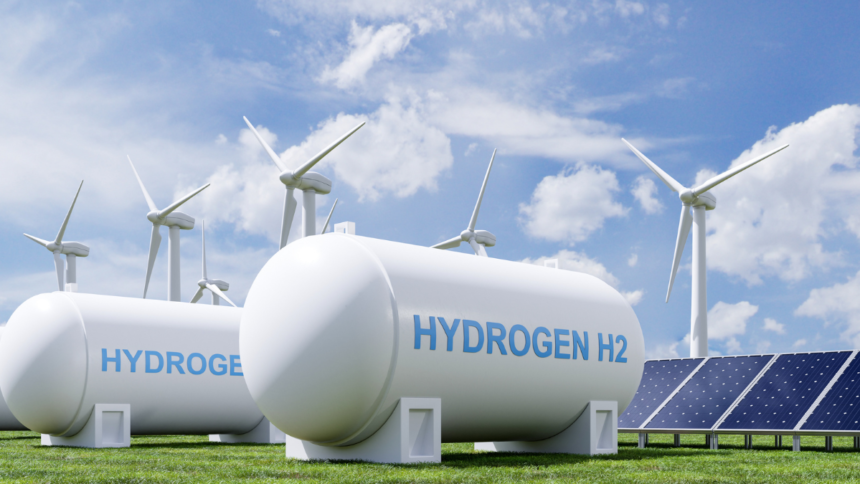
The global hydrogen industry is entering a new phase. While low-carbon hydrogen was initially promoted as a critical tool for reducing greenhouse gas emissions, the conversation is increasingly shifting toward a different priority: energy security.
- Middle East Tensions Highlight Global Energy Vulnerabilities
- Hydrogen Emerging as a Strategic Alternative
- Governments Continue Investing in Hydrogen Infrastructure
- India and Europe Push Ahead with Hydrogen Ambitions
- Cost Remains the Industry’s Biggest Challenge
- Rising Natural Gas Prices Narrow the Cost Gap
- Energy Diversification Becoming a Strategic Priority
- Long-Term Growth Will Depend on Policy Support
- Hydrogen’s Value Extends Beyond Emissions Reduction
Over the past few years, hydrogen has been positioned as a versatile solution capable of decarbonising sectors ranging from power generation and transportation to heavy industry and heating. However, as technologies matured and real-world economics came into focus, industry experts began recognising that hydrogen is not always the most cost-effective solution compared to electrification and other low-carbon alternatives.
Today, geopolitical tensions and growing concerns over energy supply resilience are giving hydrogen renewed relevance—not just as a climate solution, but as a strategic energy resource.
Middle East Tensions Highlight Global Energy Vulnerabilities
Recent instability in the Middle East has exposed the fragility of global energy and commodity supply chains.
Before regional conflicts disrupted trade routes, the Strait of Hormuz served as one of the world’s most important energy corridors, handling:
- Approximately 20% of global LNG trade
- Around 25% of internationally traded ammonia
- Nearly 37% of global urea exports
Disruptions to shipping activity triggered sharp increases in natural gas, ammonia, and fertilizer prices, highlighting the risks associated with concentrated energy supply routes.
Although prices have moderated from their peaks, many commodities continue to trade above historical averages, reinforcing concerns about long-term energy security and supply chain resilience.
Hydrogen Emerging as a Strategic Alternative
The renewed focus on supply security has increased interest in hydrogen and hydrogen-derived fuels such as ammonia and methanol.
Hydrogen can be used directly as a fuel or converted into products that serve as critical industrial feedstocks and transportation fuels. In sectors such as fertilizer production, refining, chemicals, and shipping, low-carbon hydrogen could reduce dependence on imported fossil fuels while improving supply reliability.
For governments and industrial companies alike, hydrogen is increasingly being viewed through the lens of strategic resilience rather than solely environmental sustainability.
Governments Continue Investing in Hydrogen Infrastructure
Despite economic and political debates surrounding clean energy investments, major economies continue to support hydrogen development.
United States Focuses on Industrial Competitiveness
In the United States, support for hydrogen-related infrastructure remains strong, particularly where projects enhance domestic manufacturing and energy independence.
One prominent example is CF Industries’ Blue Point project in Louisiana, which is expected to become one of the world’s largest low-carbon ammonia facilities. The project will produce blue ammonia using natural gas while capturing and permanently storing associated carbon emissions.
Federal authorities recently accelerated permitting processes for the facility, reflecting growing interest in strengthening domestic energy infrastructure and reducing supply chain vulnerabilities.
China Accelerates Green Hydrogen Leadership
China is rapidly expanding its leadership in green hydrogen production.
Hydrogen has been identified as a strategic technology under the country’s latest Five-Year Plan, with substantial investments directed toward production, infrastructure, and industrial applications.
Today, China accounts for more than half of the world’s green hydrogen projects that have reached final investment decision status.
Among the most notable developments is the Envision Chifeng project in Inner Mongolia, widely regarded as one of the world’s largest and lowest-cost green hydrogen and ammonia facilities currently under development.
India and Europe Push Ahead with Hydrogen Ambitions
India and the European Union continue to view hydrogen as a cornerstone of their long-term energy strategies.
India’s National Green Hydrogen Mission aims to establish the country as a global production hub while reducing dependence on imported fossil fuels.
Earlier this year, Indian green hydrogen developer AM Green signed a landmark green ammonia offtake agreement with European energy company Uniper, reportedly one of the largest such agreements globally.
Meanwhile, the European Union has strengthened support for hydrogen deployment through its Renewable Energy Directive III (RED III), which includes ambitious targets for renewable hydrogen adoption across industrial sectors.
These initiatives are designed to support energy independence, industrial decarbonisation, and long-term economic competitiveness.
Cost Remains the Industry’s Biggest Challenge
Despite growing momentum, economics remain the largest obstacle to widespread hydrogen adoption.
Producing green hydrogen and low-carbon ammonia remains significantly more expensive than conventional fossil fuel-based alternatives in many regions.
As a result, policymakers and investors increasingly face a critical question:
Can the additional cost of low-carbon hydrogen be justified as insurance against future energy disruptions?
Recent market conditions suggest that the answer may be evolving.
Rising Natural Gas Prices Narrow the Cost Gap
According to industry analysts, geopolitical instability has increased natural gas prices, significantly raising the cost of producing conventional “grey” ammonia.
At current European gas prices, grey ammonia production costs are estimated at approximately $800 per tonne.
By comparison, low-carbon ammonia delivered into Europe currently ranges between $700 and $1,100 per tonne, depending on production pathways and logistics.
This means some low-carbon projects are beginning to approach cost competitiveness with traditional ammonia production under current market conditions.
However, experts caution that this advantage may not be permanent. If geopolitical tensions ease and global gas flows return to normal, conventional ammonia could once again regain a cost advantage.
Energy Diversification Becoming a Strategic Priority
Regardless of short-term pricing dynamics, recent events have strengthened the case for diversified energy systems.
Low-carbon hydrogen offers countries an opportunity to reduce reliance on imported hydrocarbons while creating alternative sources of industrial feedstocks, fuels, and energy storage.
For Europe in particular, hydrogen could play an important role in strengthening energy security while supporting long-term decarbonisation goals.
At the same time, China’s emergence as a dominant producer of low-cost green hydrogen raises new strategic questions about future energy dependencies and global supply chains.
Long-Term Growth Will Depend on Policy Support
Most analysts agree that hydrogen costs will decline over time as technologies mature, manufacturing scales increase, and supply chains become more efficient.
However, industry forecasts suggest that hydrogen will continue to rely heavily on government incentives, subsidies, and supportive regulations for at least the next decade and possibly longer.
Factors likely to influence future competitiveness include:
- Natural gas prices
- Carbon pricing mechanisms
- Renewable electricity costs
- Technological innovation
- Global hydrogen trade infrastructure
- Policy incentives and market support programs
Hydrogen’s Value Extends Beyond Emissions Reduction
The latest developments in global energy markets are reshaping how governments and businesses view hydrogen.
While decarbonisation remains an important driver, hydrogen is increasingly being recognised as a strategic asset that can improve energy security, strengthen industrial resilience, and diversify supply chains.
As geopolitical uncertainty continues to influence energy markets, the value proposition for low-carbon hydrogen is evolving. It is no longer only about reducing emissions—it is also about building more secure, resilient, and future-ready energy systems.
For countries seeking to balance sustainability with energy independence, hydrogen may ultimately become one of the most important components of the global energy transition.