

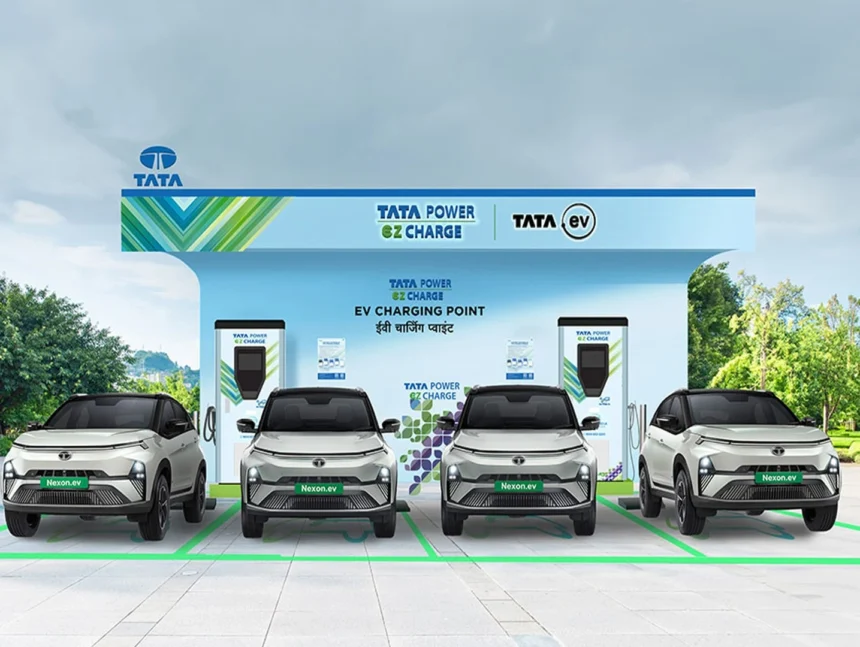
India’s transition towards cleaner transportation is gaining momentum, and Tata Power is emerging as one of the key enablers of the country’s electric mobility ecosystem. With more than 414 million green miles powered, over 750,000 EV charging sessions completed, and approximately 50,000 tonnes of carbon dioxide emissions avoided, the company continues to strengthen India’s growing electric vehicle infrastructure.
As electric vehicle adoption accelerates across passenger, commercial, and two-wheeler segments, accessible and reliable charging infrastructure is becoming a critical component of the country’s clean transportation ambitions.
Tata Power Expands EV Charging Network Across India
To support the increasing demand for electric mobility, Tata Power has built one of India’s largest EV charging ecosystems.
The company’s charging network now includes more than 5,500 public charging points across 700+ cities and towns, covering key urban centres, highways, commercial hubs, workplaces, residential communities, and transit corridors.
The extensive network is helping reduce range anxiety among EV users while making electric mobility more practical for daily commuting and long-distance travel.
India’s electric vehicle market has witnessed strong growth in recent years as consumers increasingly seek lower operating costs, reduced fuel dependence, and environmentally sustainable transportation alternatives.
Over 2.3 Lakh Home Chargers Installed
In addition to public charging infrastructure, Tata Power has significantly expanded its home charging solutions.
Working alongside leading automobile manufacturers, the company has installed more than 230,000 home EV chargers across India, enabling EV owners to conveniently charge their vehicles at home.
Home charging remains a critical element of EV adoption, especially as passenger vehicle ownership continues to grow across urban and semi-urban markets.
By combining residential charging with public infrastructure, Tata Power is helping create a comprehensive charging ecosystem that supports EV users throughout their ownership journey.
New Charging Stations Strengthen Highway and Urban Connectivity
Tata Power EZ Charge has recently expanded its charging footprint through several strategic installations across the country.
New charging stations have been launched at:
- Kopa Mall, Pune
- Indian Oil Corporation outlets along the Ahmedabad–Vadodara Expressway
- Shapoorji Pallonji Mini Hub in Kolkata
The Kolkata facility features six charging guns designed to support multiple vehicles simultaneously.
These additions are expected to improve charging accessibility for both city commuters and intercity travellers, further strengthening India’s growing EV infrastructure network.
India’s EV Market Continues Strong Growth
The expansion comes at a time when India’s electric vehicle industry is experiencing rapid growth.
According to industry estimates, EV sales in India crossed 2.55 million units in FY2026, with all major vehicle categories registering double-digit growth.
The market’s growth is being driven by:
- Rising fuel prices
- Government incentives
- Expanding charging infrastructure
- Lower operating costs
- Increasing consumer awareness around sustainability
Passenger electric vehicle adoption has also accelerated significantly as automakers continue introducing new models across different price segments.
Supporting India’s Net-Zero and Clean Mobility Goals
Electric mobility plays a crucial role in India’s broader sustainability and decarbonisation agenda.
The transportation sector is one of the largest contributors to greenhouse gas emissions globally. As India works towards reducing carbon intensity and expanding renewable energy adoption, the shift to electric vehicles is expected to play a key role in lowering emissions from road transport.
Tata Power’s charging infrastructure investments directly support these objectives by enabling greater EV penetration and reducing dependence on conventional fossil-fuel-powered transportation.
The company’s achievement of helping avoid approximately 50,000 tonnes of CO₂ emissions highlights the environmental impact that large-scale EV infrastructure deployment can deliver.
Building the Future of Sustainable Transportation
As electric vehicles move from early adoption to mainstream acceptance, charging infrastructure will remain one of the most important enablers of long-term market growth.
With more than 414 million green miles powered, a nationwide charging network, and continued investment in both public and residential charging solutions, Tata Power is helping build the foundation for India’s next generation of sustainable transportation.
From urban mobility and highway travel to residential charging and commercial fleet electrification, the company’s growing footprint is contributing to a cleaner, smarter, and more resilient mobility ecosystem for the future.