

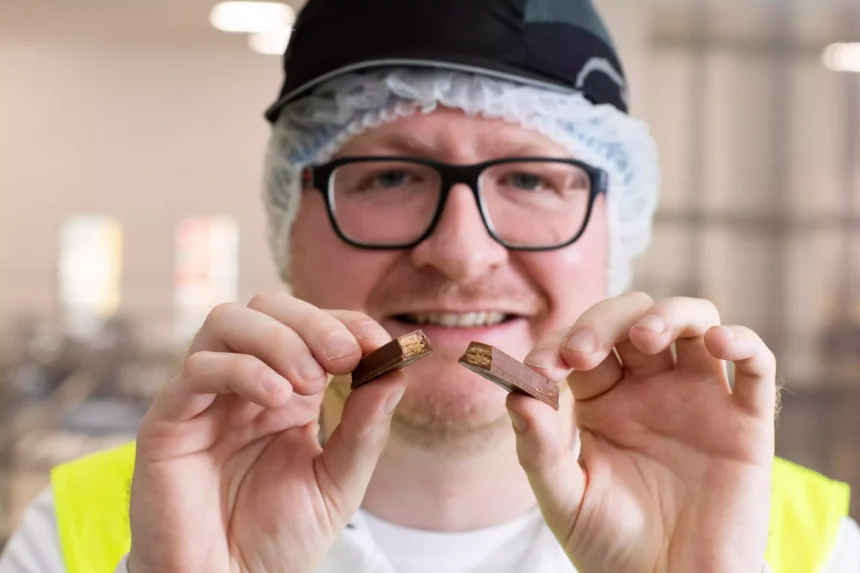
Global food and beverage giant Nestlé has announced a new partnership with UK-based regenerative agriculture company Wildfarmed to incorporate regeneratively farmed wheat into the production of its iconic KitKat chocolate bars in the United Kingdom.
The collaboration marks another step in Nestlé’s sustainability journey as the company seeks to expand the use of responsibly sourced ingredients while supporting farming practices that improve soil health, biodiversity, and climate resilience.
Bringing Regenerative Agriculture to One of the World’s Most Popular Chocolate Brands
Under the partnership, wheat supplied through Wildfarmed’s network of British farmers will be used in KitKat production at Nestlé’s manufacturing facility in York, England.
The initiative follows a series of successful commercial trials conducted at the York factory last year, where the regeneratively grown wheat was tested for large-scale manufacturing applications.
After the successful pilot phase, Nestlé has now begun integrating Wildfarmed wheat into regular production. The York facility produces approximately 1.5 billion KitKat bars annually, making the partnership one of the largest applications of regenerative agriculture ingredients within a major confectionery brand.
What Is Regenerative Agriculture?
Regenerative agriculture is gaining global attention as a sustainable farming approach designed to restore ecosystems while maintaining agricultural productivity.
The practice focuses on:
- Improving soil health and fertility
- Enhancing biodiversity
- Reducing greenhouse gas emissions
- Improving water management and retention
- Reducing soil erosion
- Supporting long-term farm resilience
- Promoting sustainable livelihoods for farmers
Unlike conventional farming methods, regenerative agriculture prioritizes rebuilding natural ecosystems while producing food more sustainably.
Wildfarmed’s Regenerative Farming Model
Founded in 2018 by Andy Cato, George Lamb, and Edd Lees, Wildfarmed works with a growing network of farmers across the United Kingdom to implement regenerative farming practices.
The company promotes key principles including:
- Minimizing soil disturbance
- Maintaining year-round soil cover
- Increasing crop diversity
- Encouraging healthier ecosystems
- Reducing reliance on intensive farming practices
According to Wildfarmed, these methods help improve biodiversity, enhance soil quality, reduce water pollution, and lower carbon emissions associated with food production.
Commenting on the partnership, Edd Lees, CEO and Co-founder of Wildfarmed, said:
“1.5 billion KitKat bars are made every year in the UK. Partnering with Nestlé to use regenerative British wheat is a big step forward in our mission to make regenerative farming the default, not the exception, and prove that nature restoration can sit at the heart of iconic brands.”
Supporting Nestlé’s Sustainability Strategy
The partnership aligns with Nestlé’s broader sustainability and climate commitments.
In 2022, the company launched its Regenerative Agriculture Framework, which outlines plans to transform agricultural sourcing practices across its global supply chain.
As part of the framework, Nestlé aims to source 50% of its key ingredients from farmers adopting regenerative agriculture practices by 2030.
The initiative also supports the company’s long-term objective of achieving net-zero greenhouse gas emissions by 2050 through more sustainable sourcing, responsible farming, and supply chain decarbonization.
Benefits for Farmers and Biodiversity
Beyond reducing environmental impact, the partnership is expected to create new opportunities for British farmers by encouraging the adoption of regenerative farming techniques.
These practices can help improve soil fertility, increase resilience against extreme weather conditions, enhance biodiversity, and reduce input costs over time.
Nestlé believes that scaling regenerative agriculture across its supply chain can create both environmental and economic benefits while strengthening the long-term sustainability of food production systems.
Dr Emma Keller, Head of Sustainability at Nestlé UK and Ireland, said:
“This collaboration is all about making the KitKat everyone has known and loved for the last 90 years in an even more sustainable way, all while supporting British wheat farmers to adopt regenerative farming practices that are intended to support carbon reduction and increase biodiversity.”
Growing Industry Focus on Sustainable Food Production
The partnership reflects a wider trend across the global food and beverage industry as companies increasingly invest in regenerative agriculture to address climate change, biodiversity loss, and food system resilience.
Major food brands are recognizing that sustainable sourcing and regenerative farming will play a crucial role in reducing supply chain emissions while meeting growing consumer demand for environmentally responsible products.
By integrating regeneratively farmed wheat into one of its flagship brands, Nestlé is taking another step toward building a more sustainable food system while demonstrating how large-scale consumer products can support environmental restoration and climate action.