

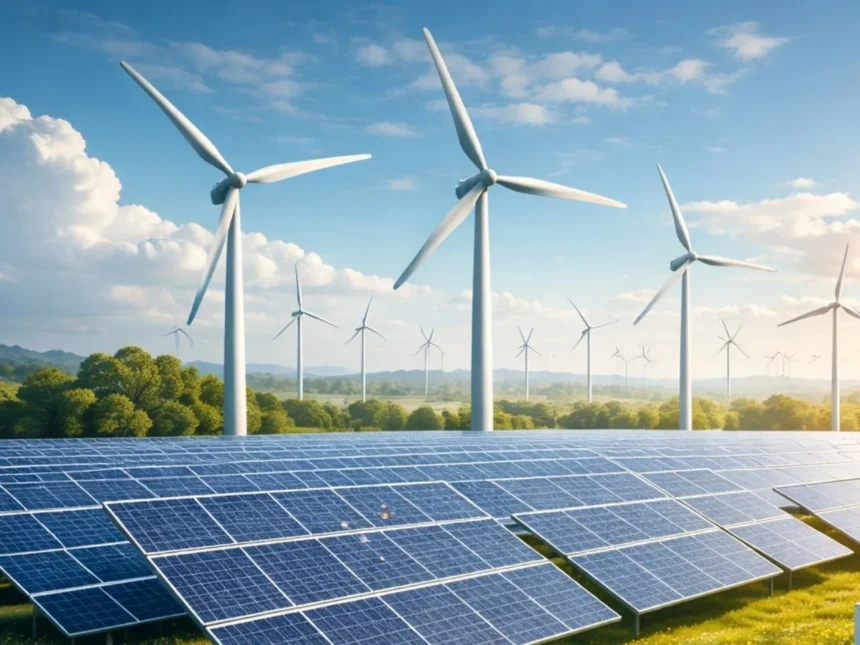
October, 28, 2026 – Oyster Renewable Energy has initiated the next stage of its renewable energy expansion in Madhya Pradesh by laying the foundation stone for Phase 2 of its wind-solar hybrid project in Agar Malwa. The development supports the company’s broader ambition to build approximately 800 MW of hybrid renewable energy capacity in the state, backed by a planned investment exceeding ₹6,500 crore.
Once the planned capacity becomes operational, the project portfolio is expected to generate more than 4,500 million units (MU) of clean electricity annually. The expansion highlights the growing role of integrated renewable energy projects in meeting India’s electricity requirements while supporting the transition towards lower-carbon power generation.
Oyster Renewable Energy Expands Its Agar Malwa Project
Phase 2 follows the commissioning of Phase 1 and represents another milestone in Oyster Renewable Energy’s Madhya Pradesh development programme.

The hybrid project integrates wind and solar generation with battery energy storage. Combining these technologies can help balance variations in renewable electricity production and improve the availability of power for commercial and industrial consumers.
The project has been designed for an operational life exceeding 30 years, reflecting the long-term nature of investments in renewable energy infrastructure.
Mahendra Solanki, Member of Parliament from Dewas, laid the foundation stone for Phase 2. The event was attended by Madhu Gehlot, Member of the Legislative Assembly from Agar, and Siddharth Bhatia, Managing Director and Chief Executive Officer of Oyster Renewable Energy.
₹6,500 Crore Investment Supports Madhya Pradesh’s Clean Energy Ambitions
Oyster Renewable Energy’s planned investment of more than ₹6,500 crore underscores Madhya Pradesh’s importance in the company’s renewable energy growth strategy.
Agar Malwa’s wind and solar resources offer opportunities for hybrid power generation, in which different renewable technologies contribute to a combined electricity supply. Battery storage can further support the management of fluctuations in generation, although actual performance depends on system design, operating conditions and storage capacity.
According to Siddharth Bhatia, Madhya Pradesh is central to Oyster Renewable Energy’s long-term ambition of reaching 3.5 GW of capacity.
The company sees the Phase 2 development as a step towards supplying more consistent clean electricity to commercial and industrial customers while working with local authorities and communities.
The company’s stated 3.5 GW ambition represents its broader capacity target. It should not be confused with the approximately 800 MW of hybrid renewable energy capacity planned specifically for Madhya Pradesh.
Jindal Stainless Partnership Adds Context to the Expansion
Oyster Renewable Energy’s development activity in Madhya Pradesh also includes a wind-solar hybrid project associated with Jindal Stainless.
In March 2026, Jindal Stainless partially commissioned a 315.6 MW hybrid renewable energy project in partnership with Oyster Renewable Energy in Agar Malwa, according to the information provided.
The project is being developed across Madhya Pradesh and Gujarat. Of its total capacity, approximately 216 MW is allocated to Madhya Pradesh, while the remaining 99 MW is planned for Gujarat.
The Madhya Pradesh portion has already been commissioned, while the Gujarat component remains part of the project’s development programme, as described in the source material.
This partnership demonstrates how renewable energy developers and industrial companies can collaborate to expand access to clean electricity. For energy-intensive businesses, hybrid renewable power can contribute to electricity procurement strategies, energy diversification and sustainability objectives.
The 315.6 MW partnership project should be understood separately from Oyster Renewable Energy’s wider plan to develop approximately 800 MW of hybrid renewable capacity in Madhya Pradesh.
Why Wind-Solar Hybrid Projects Matter for India’s Energy Transition
India’s renewable energy expansion increasingly involves combining multiple generation technologies rather than relying exclusively on standalone solar or wind installations.
Wind and solar resources can complement each other depending on local weather conditions and generation patterns. Integrating both technologies may improve the overall utilisation of renewable infrastructure, while battery storage can help shift some electricity availability to periods when generation and demand do not align.
For industrial and commercial electricity consumers, these projects offer another route to procuring renewable power at scale. Their long-term benefits, however, depend on factors such as project execution, grid connectivity, storage configuration, power purchase agreements and the availability of transmission infrastructure.
Large projects also have implications for regional investment, construction activity and the development of supporting energy infrastructure. Their economic impact depends on implementation and the extent to which local businesses and communities participate in the development process.
What Comes Next for Oyster Renewable Energy?
The foundation stone ceremony for Phase 2 marks the next stage in Oyster Renewable Energy’s expansion in Madhya Pradesh.
With approximately 800 MW of hybrid renewable capacity planned in the state and an investment commitment exceeding ₹6,500 crore, the company is positioning Madhya Pradesh as a key part of its longer-term growth strategy.
The planned annual generation of more than 4,500 MU would represent a substantial contribution to clean electricity supply once the relevant capacity is operational. The actual timeline and generation output will depend on project development, commissioning and operating conditions.
As India continues to expand renewable generation, projects combining wind, solar and energy storage are likely to remain an important part of discussions around reliable clean power for businesses and industries.
For Oyster Renewable Energy, Phase 2 is not just another construction milestone. It is a step towards expanding its hybrid energy portfolio and advancing its longer-term renewable energy ambitions.
Editorial note: Project capacities, investment figures, commissioning status and expected generation in this article are based on the supplied source material. Confirm the latest company announcements before publication.