

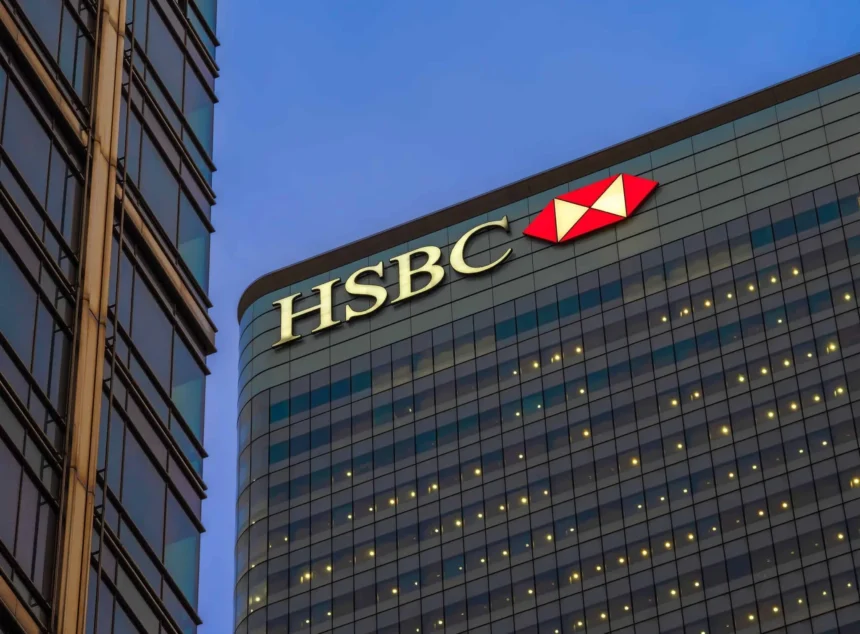
A new APLMA-compliant green loan facility, announced on 19 May 2026, gives one of Asia’s most focused circular economy investors the financial agility to move faster in markets where the plastic problem is most acute — and the opportunity is largest.
Asia has a plastic problem that defies easy description by scale alone.
India generates approximately 26,000 tonnes of plastic waste every single day. Of that, over 10,000 tonnes a day remains entirely uncollected — leaking into waterways, soil, and eventually oceans. Multiply this across India, Indonesia, Vietnam, the Philippines, Thailand, and Malaysia — the six markets at the centre of Circulate Capital’s investment strategy — and you are looking at one of the most consequential waste management gaps on the planet.
The gap is not primarily a regulatory failure, though regulation has historically lagged. It exists because economies across Asia have grown faster than their waste management systems — producing and consuming more plastic than the infrastructure built to handle it can absorb. The result is a region that generates a disproportionate share of the world’s ocean plastic, sits at the intersection of enormous ESG risk and investable opportunity, and has historically been underserved by institutional capital willing to back early- and growth-stage circular economy businesses.
That is precisely the gap that Circulate Capital was built to address. And this week, it added a new financial instrument to its toolkit.
The Deal: A Revolving Green Loan Structured for Speed
On 19 May 2026, Singapore-based Circulate Capital announced it has entered into a revolving green loan facility with HSBC to advance circular economy investments across South and Southeast Asia.
The facility is structured under the Asia Pacific Loan Market Association’s Green Loan Principles — a framework that ensures proceeds are specifically earmarked to fund projects that advance the circular economy, directly aligning with Circulate Capital’s mission to build resilient, sustainable circular supply chains.
What distinguishes this structure from a conventional credit line is its design intent. The revolving credit facility provides Circulate Capital with flexible liquidity to support investment activities and working capital needs. It is designed to scale in size as the fund grows and can be extended in duration as required. In practical terms, this means Circulate Capital can move quickly when an investment opportunity emerges — without waiting for a longer capital-raising process to close. In markets where deal windows are often short and competition from less sustainability-focused capital is real, that agility has strategic value.
Regula Schegg, Founding Partner, CFO and CCO at Circulate Capital, described the facility as enabling the firm “to move at the pace required to capitalise on impactful transactions we see in the market, with highly efficient access to capital, to the strategic benefit of our investors.” She said the partnership with HSBC validates the firm’s investment thesis and expressed confidence in the opportunities ahead across target markets.
Gilbert Ng, Head of Banking at HSBC Singapore’s Corporate and Institutional Banking division, noted that funding remains a barrier for many sustainability initiatives in the region. He described the bank’s role as essential for “unlocking capital for real-economy impact” — and confirmed HSBC’s intention to continue its partnership with Circulate Capital as the firm deploys further capital.
DLA Piper served as legal adviser to HSBC on the transaction.
What Circulate Capital Is and Why It Matters
Circulate Capital was founded in 2018 with an initial focus on investing in solutions for the ocean plastic crisis in South and Southeast Asia. It has since broadened its mandate to plastic circularity more broadly, including disruptive innovations across value chains throughout the world’s high-growth markets.
The firm occupies a specific and underserved position in the sustainable investment landscape: it focuses exclusively on circular economy businesses — recyclers, packaging innovators, materials recovery companies, and supply chain redesign platforms — in markets where those businesses face the greatest capital constraints and generate the highest environmental impact when they succeed.
Its target sectors span plastic packaging, electronics, and apparel — all areas where waste, materials recovery, and supply chain redesign carry growing ESG relevance for global brands sourcing from these markets. For multinational consumer goods companies with supply chain exposure across India, Indonesia, Vietnam, and the Philippines, the success of circular economy infrastructure in these markets is not a philanthropic interest. It is a supply chain resilience and compliance question, directly linked to the EU’s Corporate Sustainability Due Diligence Directive, India’s tightening EPR framework, and the growing regulatory scrutiny of plastic footprints across consumer-facing industries.
The $220 Million Foundation: Ocean Fund II
The HSBC green loan builds on a momentum that is already well established.
The announcement follows the successful March 2026 first close of Circulate Capital Ocean Fund II at $220 million — already surpassing the scale of its predecessor and reaching over 70% of its $300 million target.
The fund’s investor base reads like a roll call of the world’s largest consumer goods companies and development finance institutions. Backers include The Coca-Cola Company, Danone, Dow, and Procter & Gamble alongside development finance institutions including British International Investment, the French DFI Proparco, International Finance Corporation (IFC), and Swiss DFI SIFEM through responsAbility Investments. Institutional investors include Achmea Investment Management’s Impact Platform, a Dutch pension fund.
That investor composition is significant. When the world’s largest FMCG companies — brands whose packaging ends up in the same waste streams Circulate Capital is trying to redirect — are co-investing in the recycling infrastructure that processes their packaging, it signals a structural shift in how corporate ESG strategy is being operationalised. These are not charitable contributions to a worthy cause. They are strategic capital deployments in infrastructure that their supply chains and compliance obligations depend upon.
Ocean Fund II targets high-impact sectors across India, Indonesia, Thailand, Vietnam, the Philippines, and Malaysia, with investments directed toward plastic packaging, electronics, and apparel businesses that build circular supply chains at scale.
India: The Largest and Most Complex Opportunity in the Portfolio
India’s position in the Circulate Capital strategy reflects its position in the global circular economy challenge: it is simultaneously the most urgent market and the one with the largest investable opportunity.
India generates approximately 3.9 million tonnes of plastic waste annually. Of this, only 60% is currently recycled — leaving approximately 1.65 million tonnes ending up in landfills, incinerated, or escaping into the environment.
A study by FICCI and Accenture estimated that India loses over $133 billion in plastic material value over the decade to 2030 due to unsustainable packaging — and that approximately $100 billion of that value could be retrieved through a shift to circular models. The gap between current practice and economic optimum is not a small inefficiency to be incrementally improved. It is a structural investment opportunity of extraordinary scale.
The regulatory environment is now accelerating that opportunity’s realisation. India’s Plastic Waste Management Amendment Rules 2026, effective April this year, introduced mandatory minimum recycled content requirements for all plastic packaging — with rigid plastic packaging required to hit 60% recycled content for FY2026-27. A tradable EPR certificate market has been formalised, and independent environmental auditors will verify compliance. For the first time, suppliers of plastic raw materials are also brought within the compliance net.
These rules create commercial demand for recycled material at a scale that did not previously exist in India. Recyclers who can produce high-quality, certified recycled content are suddenly supplying into a mandated market — which is precisely the type of business model that institutional capital like Circulate Capital’s can back and scale.
A national circular economy roadmap, developed in partnership with CSIRO, projects that by 2035, two-thirds of all plastics used in India could be recycled — and that single-use plastics could be substantially phased out. Getting from current recycling rates to that target requires capital, infrastructure, and the kind of patient, mission-aligned investment that development finance institutions and dedicated impact funds provide. Circulate Capital, backed by HSBC’s liquidity facility, is positioned to be a primary capital provider in that journey.
The Green Loan as a Model for Sustainable Finance in Asia
The APLMA Green Loan Principles under which this facility is structured deserve attention as a governance mechanism, not just a compliance label.
Green loan frameworks require that proceeds be directed exclusively toward qualifying green activities, with documentation of intended environmental outcomes and ongoing reporting on actual impact. In a region where greenwashing risk is high and sustainability claims are often difficult to verify, the APLMA framework provides a layer of accountability that benefits both borrower and lender — and, critically, the institutional investors whose capital underpins the fund.
Soumitro Mukerji, a partner at DLA Piper, noted that the structure demonstrates how financial innovation can drive measurable environmental progress at scale and accelerate the transition to resource-efficient supply chains. That framing — financial innovation in service of environmental outcomes — is the template that sustainable finance at scale requires. Not concessional capital that can only be deployed in a small number of high-visibility projects, but commercial structures that can be replicated, scaled, and embedded into the mainstream of institutional lending.
HSBC’s willingness to structure a revolving facility of this type for a dedicated circular economy fund — the bank’s first green loan to Circulate Capital — is itself a signal about where institutional banking is moving. The largest global banks are increasingly structuring their sustainability-linked lending not as PR instruments but as commercial products with genuine impact measurement requirements.
What This Means for India’s ESG Investment Landscape
The Circulate Capital-HSBC deal is one signal in a broader pattern of sustainable capital flowing into India’s circular economy infrastructure — but it is an important one.
India’s compliance landscape is tightening rapidly. SEBI’s mandatory BRSR Core framework requires the top 1,000 listed companies to disclose value chain sustainability performance from FY2026, with external assurance required from FY2026-27. EPR obligations are expanding from plastics into e-waste and textile sectors. The Carbon Credit Trading Scheme is raising industrial benchmarks. Every one of these regulatory developments increases the commercial demand for the recycled materials, circular supply chains, and waste management infrastructure that Circulate Capital backs.
For Indian companies — particularly in FMCG, retail, packaging, and e-commerce — the arrival of institutional capital at scale into recycling and circular economy infrastructure is significant. It means that the suppliers they need to meet their EPR obligations and BRSR disclosures will increasingly have access to the growth capital required to scale. The constraint is shifting from regulatory intent to execution infrastructure, and capital is beginning to fill that gap.
The Ellen MacArthur Foundation has estimated that a circular plastics economy approach could reduce plastic entering oceans by 80% by 2040, cut greenhouse gas emissions by 25%, generate $200 billion in annual savings, and create 700,000 additional jobs globally. India, as the world’s most populous nation and one of its largest plastic waste generators, stands to capture a disproportionate share of both the environmental benefit and the economic opportunity embedded in that transition.
The Circulate Capital HSBC facility, announced on 19 May 2026, is one piece of the financing architecture that transition requires. It is, however, a well-structured, credible, and commercially sound piece — and that matters as much as the capital it represents.
Microsoft, 1M1B Roll Out 5,000 Green Skills and Applied AI Internships