

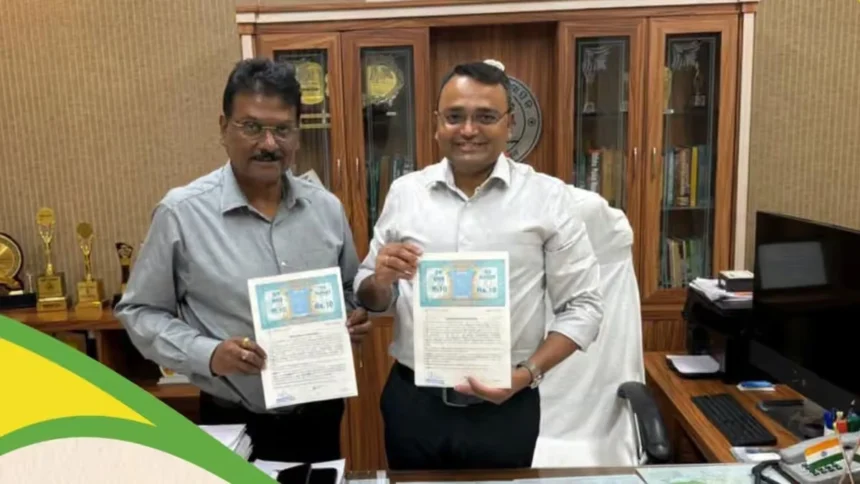
30 October 2026 – Mahanadi Coalfields Limited (MCL), a subsidiary of Coal India Limited, has committed ₹1.51 crore to two community development projects in Sambalpur, Odisha, focusing on tuberculosis (TB) patient nutrition and solar-powered streetlighting.
The company signed two Memorandums of Understanding (MoUs) with the district administration on October 28, 2026. One agreement allocates ₹1.23 crore to nutritional support for 1,100 TB patients over one year. The second commits ₹28.16 lakh to installing 80 solar streetlights across four villages and two hamlets in Baham Gram Panchayat.
Together, the projects address two distinct community needs: helping people undergoing TB treatment access nutritional assistance and improving lighting infrastructure in rural settlements.
MCL’s ₹1.23 Crore CSR Initiative to Support 1,100 TB Patients
The larger of the two projects will provide nutritional food baskets to 1,100 tuberculosis patients in Sambalpur district over 12 months.
The initiative operates under the Government of India’s Ni-kshay Mitra programme, which encourages individuals, organisations and institutions to support people receiving TB treatment through nutritional, social and other forms of assistance.
Adequate nutrition is an important component of tuberculosis care. Patients may experience weight loss and nutritional deficiencies, while limited household resources can make it difficult to maintain an appropriate diet throughout treatment.
By supporting food baskets for patients, MCL’s intervention aims to help address this challenge alongside the medical care provided through the public health system.
The agreement was signed by Jyotirmay Sinha, MCL’s General Manager for Corporate Social Responsibility, and Siddheshwar Baliram Bondar, IAS, Collector and District Magistrate of Sambalpur.
What the TB nutrition programme includes
- CSR allocation: ₹1.23 crore
- Beneficiaries: 1,100 TB patients
- Support period: One year
- Delivery model: Nutritional food baskets
- Programme framework: Ni-kshay Mitra
Based on the announced allocation, the budget works out to approximately ₹11,182 per patient over the year. This is an indicative average, not a confirmed individual entitlement or a statement of the final cost of each food basket.
The initiative also aligns with India’s broader efforts to strengthen community-level support for people affected by tuberculosis.
80 Solar Streetlights Planned for Rural Sambalpur
MCL’s second CSR agreement focuses on a different local requirement: access to streetlighting in rural settlements.
The company has allocated ₹28.16 lakh for the installation of 80 solar streetlights in four villages and two hamlets within Baham Gram Panchayat, which falls in MCL’s operational area.
The project is intended to improve visibility in public spaces and make movement through local roads and shared areas easier after dark.
For settlements with limited streetlighting infrastructure, solar-powered systems can provide an alternative to conventional grid-connected installations. Their effectiveness, however, depends on appropriate placement, equipment quality, battery performance and ongoing maintenance.
The planned installations will therefore need to be implemented and maintained effectively to deliver lasting benefits to residents.
Solar streetlighting project: Key details
- CSR allocation: ₹28.16 lakh
- Number of lights: 80
- Coverage: Four villages and two hamlets
- Location: Baham Gram Panchayat, Sambalpur district
- Technology: Solar-powered streetlights
The project brings a renewable-energy component into MCL’s community development programme while addressing a practical infrastructure need.
Why These MCL CSR Projects Matter
The two agreements illustrate how corporate social responsibility funding can be directed towards clearly defined local requirements rather than broad, general-purpose initiatives.
The TB nutrition programme focuses on a specific beneficiary group, with a stated target of 1,100 patients and a defined support period. The streetlighting project similarly specifies the number of installations and the settlements expected to receive them.
These details create a foundation for monitoring implementation and assessing whether the funding reaches its intended beneficiaries.
However, the number of people covered or facilities installed represents an output, not necessarily a complete measure of long-term impact. For the nutrition programme, relevant indicators could include the regularity of food-basket distribution, beneficiary access and continuity of support. For the streetlighting project, useful measures could include the number of lights installed and operational, maintenance performance and community feedback.
Tracking these indicators would provide a clearer picture of the projects’ effectiveness beyond the initial financial commitments.
The Role of Local CSR Spending in India’s Development Priorities
Under Section 135 of the Companies Act, 2013, qualifying companies are required to meet applicable corporate social responsibility obligations. The framework supports investment in areas such as healthcare, education, environmental sustainability and community development, subject to the relevant rules.
For companies operating in resource-intensive industries, community-focused spending can be particularly significant in locations connected with their operations.
MCL’s Sambalpur projects combine healthcare assistance with infrastructure investment in the district where the company is headquartered and operates. This local focus makes the initiatives relevant to discussions about how CSR resources can support community needs around industrial activity.
The projects also demonstrate two different ways CSR funds can be deployed: through direct support for vulnerable people and through the creation of community infrastructure.
The next test will be implementation. Transparent reporting on delivery, maintenance and beneficiary outcomes would help establish whether the commitments translate into sustained improvements for local communities.
MCL’s ₹1.51 Crore CSR Commitment: At a Glance
| Project detail | Announced commitment |
|---|---|
| Total CSR investment | ₹1.51 crore |
| TB nutrition support | ₹1.23 crore |
| TB patients covered | 1,100 |
| Nutrition support period | One year |
| Solar streetlighting allocation | ₹28.16 lakh |
| Solar streetlights planned | 80 |
| Streetlighting coverage | Four villages and two hamlets |
| Gram Panchayat | Baham |
| District | Sambalpur, Odisha |
The Bigger Picture
Mahanadi Coalfields’ latest CSR commitments combine a healthcare intervention with a rural infrastructure project. The nutritional assistance is designed to support people undergoing TB treatment, while the solar streetlights aim to improve lighting in six rural settlements.
The total allocation of ₹1.51 crore provides a clear starting point for evaluating the initiatives. Their longer-term value will depend on consistent delivery, functioning infrastructure and measurable benefits for the communities they are intended to serve.
For CSR programmes, the distinction between announcing an allocation and demonstrating an outcome remains important. Implementation data and follow-up reporting will show how effectively these commitments address the needs identified in Sambalpur.
ESG World News will continue to track corporate responsibility initiatives, sustainability investments and community development projects across India.
DuPont’s Net-Zero Emissions Targets Validated by SBTi, With 90% Reductions Targeted by 2050