

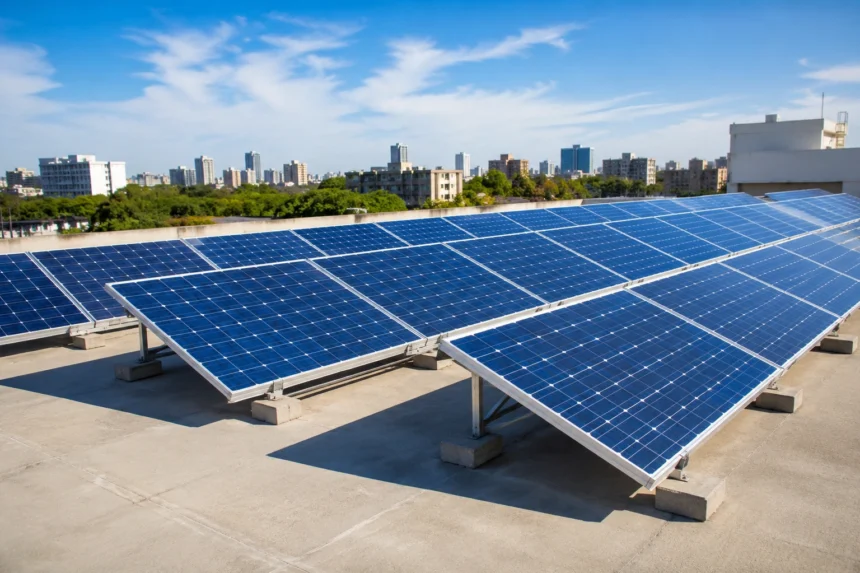
New Delhi: Hinduja Renewables Energy Pvt. Ltd. (HREPL), the renewable energy arm of the Hinduja Group, has signed long-term solar power supply agreements with Höganäs India and Hirschvogel Components India, strengthening efforts to accelerate industrial decarbonisation across India’s manufacturing sector.
- Renewable Energy to Drive Manufacturing Sustainability
- Supporting India’s Industrial Energy Transition
- Hinduja Renewables Targets 10 GW Capacity by 2030
- Energy Storage and Hybrid Solutions to Play a Key Role
- Growing Demand for Renewable Energy in Manufacturing
- Strong Track Record in Industrial Renewable Energy Partnerships
- Outlook
The agreements will enable both companies to increase their use of renewable energy in manufacturing operations while reducing dependence on conventional power sources and lowering carbon emissions.
Under the contracts, a combined 14 MWp of solar power capacity will be supplied from HREPL’s 35 MWp solar park in Nanded, Maharashtra, helping the two industrial companies advance their sustainability and clean energy goals.
Renewable Energy to Drive Manufacturing Sustainability
The partnership reflects a growing trend among industrial companies seeking cleaner energy sources to meet environmental commitments, improve energy security, and manage long-term operating costs.
According to HREPL, the renewable energy supplied through the agreements is expected to offset approximately 0.53 million metric tonnes of carbon dioxide equivalent (CO₂e) over the operational life of the projects.
The move aligns with increasing pressure on manufacturers worldwide to reduce greenhouse gas emissions, improve ESG performance, and transition toward low-carbon production processes.
Supporting India’s Industrial Energy Transition
Höganäs India, a leading manufacturer of metal powders, and Hirschvogel Components India, a global supplier of steel and aluminium forged components, are among the latest industrial players investing in renewable energy procurement to decarbonise operations.
As industries face rising energy costs and stricter sustainability expectations from customers, investors, and regulators, renewable energy adoption is becoming a key pillar of long-term business strategy.
The agreements are expected to provide the companies with:
- Access to clean and reliable energy
- Reduced carbon footprint
- Improved energy cost predictability
- Enhanced ESG and sustainability performance
- Greater resilience against energy market volatility
Hinduja Renewables Targets 10 GW Capacity by 2030
HREPL currently manages a diversified renewable energy portfolio of approximately 3 GW, spanning solar, wind, hybrid, and energy storage projects.
The company has outlined an ambitious roadmap to expand its portfolio to 10 GW by 2030, supported by investments in battery storage, hybrid renewable systems, and dispatchable clean energy infrastructure.
As part of its growth strategy, HREPL is focusing on developing cluster-based renewable energy projects that serve multiple industrial customers through long-term power supply arrangements.
The company believes this approach can help manufacturers access affordable clean energy while accelerating India’s broader energy transition.
Energy Storage and Hybrid Solutions to Play a Key Role
HREPL’s future expansion plans include integrating significant battery storage capacity alongside renewable generation assets.
The company is evaluating plans for approximately 2–4 GWh of battery energy storage systems (BESS) to improve power reliability and support industrial customers requiring firm and predictable renewable energy supply.
By combining solar, wind, and energy storage technologies, HREPL aims to deliver round-the-clock clean energy solutions that address both sustainability and operational requirements.
Growing Demand for Renewable Energy in Manufacturing
India’s industrial sector is increasingly turning to renewable energy as companies seek to meet net-zero commitments and reduce exposure to fluctuating energy prices.
Experts believe industrial decarbonisation will be a major driver of renewable energy demand over the coming decade, particularly in sectors such as metals, automotive components, chemicals, and heavy manufacturing.
Renewable energy purchase agreements are becoming an attractive solution for businesses seeking long-term energy cost stability while meeting sustainability targets.
Strong Track Record in Industrial Renewable Energy Partnerships
The latest agreements build on HREPL’s growing portfolio of industrial renewable energy projects.
Previous partnerships include:
- An 86 MWp solar agreement with Lloyds Metals & Energy
- A 10 MWp renewable energy agreement with LG Electronics
These projects demonstrate increasing demand for renewable energy solutions among large industrial consumers looking to reduce emissions and strengthen energy resilience.
Outlook
The agreements with Höganäs India and Hirschvogel Components India highlight the growing role of renewable energy in transforming India’s manufacturing sector.
As industries accelerate decarbonisation efforts and governments push for cleaner energy adoption, partnerships between renewable energy developers and industrial companies are expected to play a crucial role in achieving sustainability goals.
With plans to expand its renewable energy portfolio to 10 GW by 2030, Hinduja Renewables is positioning itself as a key player in supporting India’s clean energy transition while helping industrial customers build more sustainable and resilient operations.