

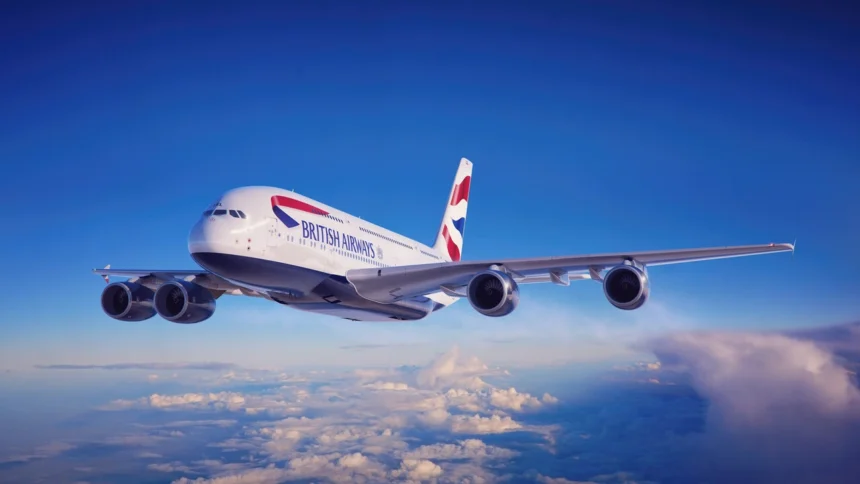
Biofuels producer EcoCeres has expanded its sustainable aviation fuel (SAF) partnership with British Airways, signing a new multi-year agreement that will extend the supply of waste-based SAF to the airline through 2030.
The extended deal represents another significant step in the aviation industry’s efforts to reduce carbon emissions and accelerate the adoption of sustainable fuels as airlines work toward ambitious net-zero targets.
British Airways Strengthens Sustainable Aviation Fuel Strategy
Under the new agreement, EcoCeres will continue supplying British Airways with sustainable aviation fuel produced from waste-based biomass feedstocks, including used cooking oil (UCO).
According to the companies, the extended partnership is expected to help British Airways reduce lifecycle carbon emissions by approximately 198,000 metric tonnes compared to conventional jet fuel over the duration of the agreement.
The emissions reduction is equivalent to the total carbon footprint generated by approximately 341,000 economy-class passengers travelling on return flights between London and New York, highlighting the potential impact of SAF in reducing aviation emissions.
Waste-Based SAF Plays Key Role in Aviation Decarbonisation
Headquartered in Hong Kong, EcoCeres specializes in converting waste-based biomass into low-carbon fuels and renewable products.
The company’s portfolio includes:
- Sustainable Aviation Fuel (SAF)
- Hydrotreated Vegetable Oil (HVO)
- Renewable Naphtha
EcoCeres produces SAF using 100% waste-derived feedstocks, such as used cooking oil and other waste biomass sources. The company states that its fuel can deliver lifecycle greenhouse gas emission reductions of up to 94% compared with conventional fossil-based jet fuel.
Unlike traditional jet fuel, sustainable aviation fuel is produced from renewable or waste-based feedstocks and can be used in existing aircraft and airport infrastructure without major modifications.
Aviation Industry Accelerates Net-Zero Efforts
The aviation sector remains one of the most challenging industries to decarbonise due to the limited availability of alternatives to liquid aviation fuels for long-haul flights.
As a result, SAF is increasingly being viewed as one of the most practical pathways for reducing emissions from commercial aviation while maintaining existing flight operations.
British Airways’ parent company, International Airlines Group (IAG), has established ambitious sustainability targets, including:
- Using 10% SAF across operations by 2030
- Consuming 1 million tonnes of SAF annually by 2030
- Achieving net-zero emissions by 2050
IAG has emerged as one of the aviation industry’s most active SAF adopters. In 2025, the group’s airlines accounted for approximately 15% of global SAF consumption, demonstrating growing demand for low-carbon aviation fuels.
The company has also indicated that it has already secured around 42% of the sustainable aviation fuel volumes required to achieve its 2030 target.
Growing Demand for Sustainable Aviation Fuel
The extension of the EcoCeres-British Airways partnership reflects increasing momentum behind sustainable aviation fuel adoption globally.
Governments, airlines, fuel producers, and investors are increasingly supporting SAF production as regulatory requirements and corporate climate commitments drive demand for cleaner aviation solutions.
However, one of the industry’s biggest challenges remains scaling production capacity to meet future demand. Industry analysts expect global SAF demand to grow significantly over the next decade as airlines seek to comply with emissions reduction targets and sustainability regulations.
Leadership Perspective
Commenting on the partnership extension, Matti Lievonen, Chief Executive Officer of EcoCeres, highlighted the importance of collaboration in accelerating aviation decarbonisation.
He noted that the agreement reflects the strong relationship between the two companies and their shared commitment to advancing practical carbon reduction solutions for the aviation industry.
EcoCeres also reaffirmed its focus on expanding the availability of waste-based SAF and supporting customers as they progress toward their climate and emissions-reduction goals.
Outlook
The extended supply agreement between EcoCeres and British Airways underscores the growing role of sustainable aviation fuel in transforming the aviation industry.
As airlines face increasing pressure to reduce emissions while maintaining operational growth, long-term SAF partnerships are becoming essential to achieving net-zero objectives.
With waste-based feedstocks offering significant lifecycle carbon reductions, collaborations such as this are expected to play a critical role in scaling sustainable aviation fuel production and supporting the aviation sector’s transition toward a lower-carbon future.