

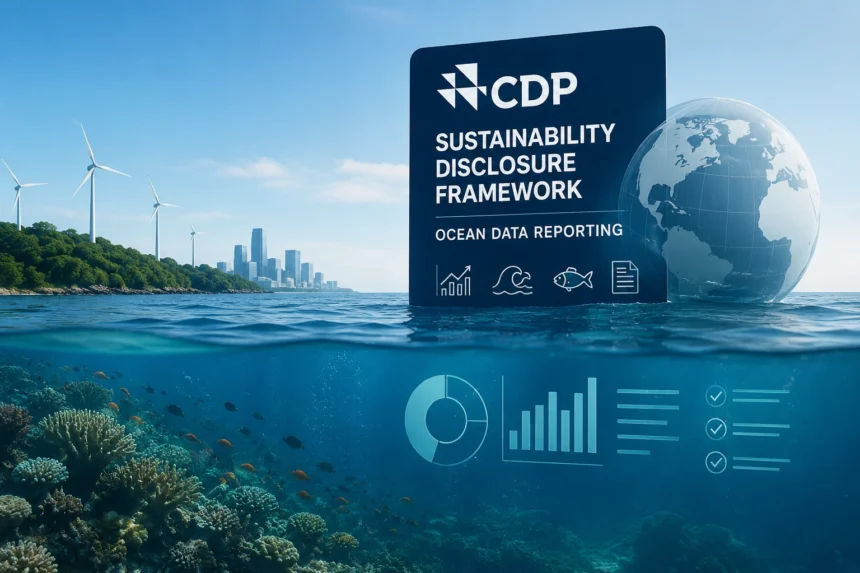
Global environmental disclosure platform CDP has announced the expansion of its sustainability reporting framework to include ocean-related data, enabling companies to disclose their exposure to marine risks, dependencies, impacts, and business opportunities.
The move marks a significant step in strengthening corporate environmental reporting as investors, regulators, and stakeholders increasingly seek greater transparency around the role businesses play in protecting ocean ecosystems and managing ocean-related sustainability challenges.
The new disclosure category will be available as part of CDP’s 2026 reporting cycle, which opens this month.
Strengthening Environmental Reporting Beyond Climate and Water
CDP operates one of the world’s largest environmental disclosure systems, helping investors, policymakers, and businesses measure and evaluate environmental performance across key sustainability areas.
The platform currently supports disclosures covering:
- Climate change
- Water security
- Forests
- Biodiversity
- Plastics
- Environmental governance
With the addition of ocean reporting, CDP aims to provide a more comprehensive view of corporate environmental impacts and dependencies.
In 2025, more than 22,000 companies disclosed environmental data through CDP, making it one of the most widely used sustainability reporting platforms globally.
Closing the Ocean Data Gap
According to CDP, the new ocean disclosure framework is designed to address a growing information gap surrounding how businesses interact with marine ecosystems and ocean resources.
Many industries, including shipping, fisheries, energy, tourism, manufacturing, and consumer goods, rely directly or indirectly on healthy ocean systems. However, consistent and standardized corporate reporting on ocean-related risks has remained limited.
The expanded framework will help organizations provide information on:
- Ocean-related business risks and opportunities
- Dependencies on marine ecosystems
- Environmental impacts on oceans
- Ocean governance and sustainability policies
- Strategic planning related to marine issues
- Financial implications of ocean-related risks
The disclosures are also expected to help investors better assess how companies are managing emerging environmental challenges linked to ocean health.
New Reporting Requirements
CDP’s updated questionnaire will introduce a range of ocean-focused reporting metrics and governance indicators.
Companies will be asked to disclose information related to:
Ocean Targets and Commitments
Organizations will report on goals and targets aimed at reducing ocean-related environmental impacts and supporting marine sustainability.
Supply Chain Engagement
The framework will examine how businesses work with suppliers and partners to address ocean-related risks across their value chains.
Board-Level Oversight
Companies will also be required to provide details on governance structures and board oversight mechanisms related to ocean sustainability issues.
The new reporting requirements are intended to improve accountability while encouraging stronger integration of ocean considerations into corporate sustainability strategies.
Growing Focus on Ocean Sustainability
The expansion comes amid increasing global attention on ocean conservation and the economic importance of marine ecosystems.
Oceans play a critical role in:
- Regulating global climate systems
- Supporting biodiversity
- Sustaining fisheries and food security
- Facilitating international trade
- Absorbing carbon emissions
- Supporting coastal economies
At the same time, marine environments face growing pressures from pollution, overfishing, habitat degradation, and climate change.
As a result, investors and sustainability-focused stakeholders are placing greater emphasis on understanding how businesses manage ocean-related environmental risks.
Better Data for Better Decision-Making
Commenting on the initiative, Oliver Tanqueray, Head of Ocean at CDP, highlighted the importance of improving transparency around ocean-related sustainability issues.
He noted that while oceans are fundamental to both environmental and economic wellbeing, decision-makers often lack access to consistent and reliable corporate data on marine impacts and risks.
According to Tanqueray, introducing ocean disclosures into CDP’s reporting framework will help companies, investors, and policymakers make more informed decisions while strengthening efforts to protect marine ecosystems.
Supporting Sustainable Business Strategies
The inclusion of ocean reporting reflects a broader trend in sustainability reporting, where environmental disclosures are expanding beyond traditional climate-focused metrics to include biodiversity, nature-related risks, water security, and ecosystem protection.
As environmental regulations evolve and stakeholder expectations increase, comprehensive sustainability reporting is becoming an essential component of corporate governance and risk management.
By incorporating ocean-related disclosures into its framework, CDP aims to help organizations better understand their environmental footprint while supporting more sustainable business practices and long-term value creation.
With over 22,000 companies already participating in its disclosure system, the addition of ocean reporting is expected to further strengthen transparency and accountability across global supply chains and financial markets.