
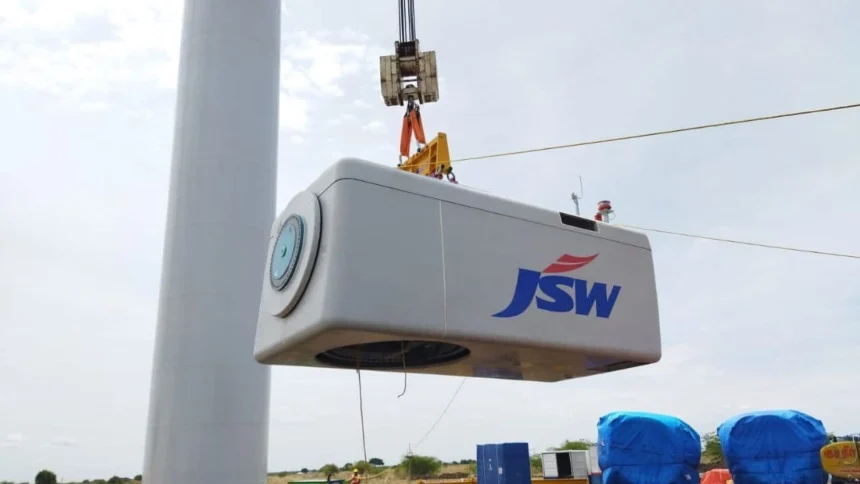
JSW Energy has commissioned a new wind turbine blade manufacturing facility in Halol, Gujarat, as part of its strategy to strengthen renewable energy manufacturing capabilities and enhance control over its clean energy supply chain.
- Supporting India’s Renewable Energy Growth
- In-House Manufacturing to Improve Efficiency
- Expansion Plans Continue with Karnataka Facility
- Growing Wind Energy Portfolio
- Locked-In Generation Capacity Reaches 32.1 GW
- Expanding Energy Storage Capabilities
- Ambitious 2030 Growth Targets
- Commitment to Carbon Neutrality
The facility is designed to produce up to 450 wind turbine blades annually, supporting approximately 600 MW of wind energy capacity. The plant will manufacture advanced 82-metre blades specifically engineered for 4 MW wind turbine generators, supporting the growing demand for large-scale renewable energy projects across India.
The development marks another significant milestone in JSW Energy’s long-term plan to expand its renewable energy portfolio while increasing domestic manufacturing capacity.
Supporting India’s Renewable Energy Growth
India’s renewable energy sector is witnessing rapid expansion as the country accelerates efforts to achieve its clean energy and climate goals. Against this backdrop, renewable energy developers are increasingly focusing on strengthening supply chains and reducing dependence on external suppliers.
The newly commissioned facility is expected to support these objectives by enabling local production of critical wind energy components and contributing to domestic manufacturing initiatives under the Ministry of New and Renewable Energy (MNRE).
The plant’s production capabilities are aligned with India’s push for greater localization in renewable energy infrastructure and equipment manufacturing.
In-House Manufacturing to Improve Efficiency
According to JSW Energy, bringing blade manufacturing in-house will offer several operational advantages.
The company expects the facility to:
- Reduce logistics and transportation costs
- Improve project execution timelines
- Lower dependency on third-party suppliers
- Provide better protection against raw material price fluctuations
- Enhance overall cost efficiency for renewable energy projects
By vertically integrating key components of the renewable energy value chain, JSW Energy aims to improve operational resilience while maintaining greater control over project delivery.
Expansion Plans Continue with Karnataka Facility
The Halol facility forms part of a broader manufacturing expansion strategy.
JSW Energy revealed that another wind blade manufacturing plant located in Chitradurga, Karnataka, is currently in the advanced stages of commissioning. Once operational, the additional facility is expected to further strengthen the company’s manufacturing capabilities and support future renewable energy projects.
The expansion reflects growing industry demand for domestically manufactured renewable energy equipment as India scales up wind and solar installations.
Growing Wind Energy Portfolio
JSW Energy has emerged as one of India’s leading renewable energy players with a significant presence in the wind power sector.
The company currently operates approximately 3.9 GW of installed wind energy capacity and has secured a substantial development pipeline that includes:
- 6.5 GW of hybrid energy projects, where wind energy plays a major role
- 2.4 GW of standalone wind projects under development
These projects form part of the company’s broader renewable energy growth strategy aimed at supporting India’s transition toward cleaner power generation.
Locked-In Generation Capacity Reaches 32.1 GW
Across its energy portfolio, JSW Energy has achieved a locked-in generation capacity of 32.1 GW, comprising operational assets, projects under construction, and future development opportunities.
The portfolio spans multiple energy sources, including:
- Renewable energy
- Wind power
- Solar energy
- Hydroelectric power
- Thermal power generation
This diversified energy mix positions the company to meet growing electricity demand while supporting India’s decarbonization objectives.
Expanding Energy Storage Capabilities
Beyond power generation, JSW Energy is actively building its energy storage infrastructure to support grid stability and renewable energy integration.
The company currently has a locked-in energy storage capacity of 29.6 GWh, which includes:
- Pumped hydro energy storage projects
- Battery energy storage systems (BESS)
Energy storage is expected to play a critical role in balancing intermittent renewable energy generation and ensuring reliable electricity supply as renewable capacity continues to expand.
Ambitious 2030 Growth Targets
JSW Energy has outlined ambitious growth plans for the remainder of the decade.
By 2030, the company aims to achieve:
- 30 GW of generation capacity
- 40 GWh of energy storage capacity
These targets are central to the company’s broader clean energy strategy and align with India’s renewable energy ambitions.
Commitment to Carbon Neutrality
In addition to expanding renewable energy and storage assets, JSW Energy has committed to achieving carbon neutrality by 2050.
The company’s investments in renewable energy generation, manufacturing infrastructure, and energy storage solutions are expected to play a key role in reducing emissions while supporting India’s transition toward a low-carbon economy.
With the commissioning of the Halol wind blade manufacturing facility, JSW Energy continues to strengthen its position as a major player in India’s renewable energy ecosystem while advancing its long-term sustainability and clean energy goals.