

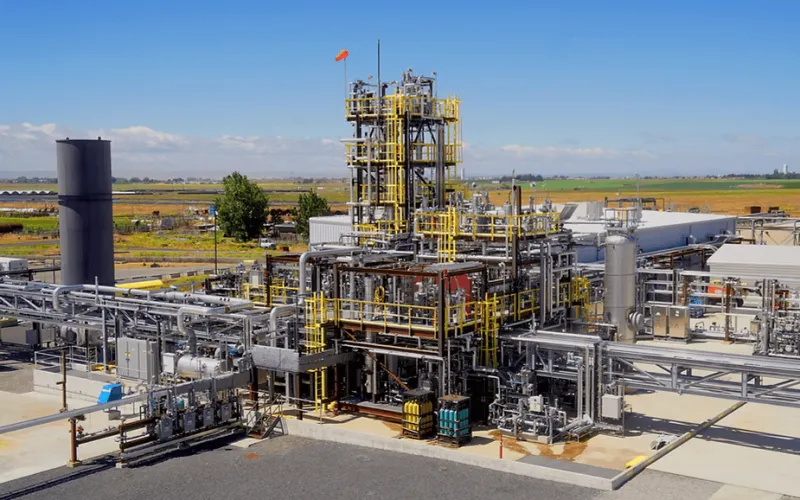
Carbon transformation company Twelve has launched AirPlant One, the first commercial-scale facility in the United States producing E-Jet fuel, a next-generation sustainable aviation fuel (SAF) created from captured carbon dioxide (CO₂), water, and renewable electricity.
- AirPlant One Begins Commercial Production in Washington State
- How Twelve’s E-Jet Fuel Technology Works
- Microsoft and Alaska Airlines Back Commercial Scale-Up
- Benefits Beyond Emissions Reduction
- Enhanced Energy Security
- Greater Price Stability
- Reduced Land and Water Requirements
- Support for Domestic Manufacturing
- Decarbonising Long-Haul Aviation
- AirPlant One Also Produces E-Naphtha
- Building a Circular Carbon Economy
- Outlook
The launch marks a major milestone for the sustainable aviation industry, demonstrating how carbon capture and renewable energy can be combined to create low-carbon fuels capable of reducing aviation emissions without requiring changes to existing aircraft or airport infrastructure.
AirPlant One Begins Commercial Production in Washington State
Located in Moses Lake, Washington, AirPlant One is now producing commercial-grade sustainable aviation fuel that meets ASTM International certification standards, allowing it to be used in existing commercial aircraft.
The fuel is already being supplied to the aviation market, with Alaska Airlines expected to operate regular domestic flights powered by E-Jet fuel produced at the facility.
Founded in 2015, California-based Twelve specializes in transforming captured carbon dioxide into fuels, chemicals, and materials through a proprietary process powered entirely by renewable energy. The process also generates water and oxygen as byproducts, contributing to a more sustainable production cycle.
According to the company, its E-Jet fuel can reduce lifecycle greenhouse gas emissions by up to 90% compared to conventional fossil-based jet fuel.
How Twelve’s E-Jet Fuel Technology Works
Unlike traditional sustainable aviation fuels that rely on agricultural feedstocks, used cooking oil, or biomass, Twelve’s E-Jet fuel is produced using a power-to-liquid (PtL) process.
The company’s proprietary eManufacturing platform combines:
- Captured carbon dioxide (CO₂)
- Water
- Renewable electricity
Through a series of chemical reactions, these inputs are transformed into hydrocarbon molecules that are chemically identical to conventional jet fuel.
Because the resulting fuel mirrors traditional aviation fuel at a molecular level, it can serve as a drop-in replacement without modifications to:
- Aircraft engines
- Fuel systems
- Airport infrastructure
- Aviation supply chains
This compatibility is viewed as a significant advantage for accelerating sustainable aviation fuel adoption worldwide.
Microsoft and Alaska Airlines Back Commercial Scale-Up
The development of AirPlant One received support from both Microsoft and Alaska Airlines, which committed in 2022 to purchase fuel from the facility.
The companies also invested in Twelve through:
- Microsoft Climate Innovation Fund
- Alaska Star Ventures
Representatives from both organizations participated in the official launch and ribbon-cutting ceremony for the facility.
Melanie Nakagawa, Chief Sustainability Officer at Microsoft, said the investment reflects the company’s commitment to advancing scalable climate solutions while supporting the future of cleaner aviation.
The collaboration highlights growing corporate interest in sustainable aviation fuel as businesses seek to reduce emissions associated with air travel.
Benefits Beyond Emissions Reduction
In addition to significant carbon reductions, Twelve says its E-Jet fuel offers several advantages over some existing sustainable fuel pathways.
Enhanced Energy Security
Producing fuel from renewable electricity and captured carbon dioxide helps diversify fuel sources and reduce dependence on imported fossil fuels.
Greater Price Stability
Because renewable electricity is a primary production input, the technology may offer more predictable long-term costs compared to fuels linked to volatile oil markets.
Reduced Land and Water Requirements
Unlike many biofuel pathways, E-Jet fuel production does not depend heavily on agricultural land or large-scale crop cultivation.
Support for Domestic Manufacturing
The technology has the potential to stimulate industrial investment, create skilled jobs, and strengthen domestic clean energy supply chains.
Decarbonising Long-Haul Aviation
While electrification may be suitable for short-distance transportation, long-haul aviation remains one of the most difficult sectors to decarbonize. Sustainable aviation fuels are increasingly seen as one of the most practical near-term solutions.
AirPlant One Also Produces E-Naphtha
Beyond aviation fuel, AirPlant One is manufacturing E-Naphtha, a synthetic chemical feedstock produced using captured carbon dioxide, water, and renewable electricity.
The product is chemically equivalent to conventional fossil-based naphtha and can be used in the production of:
- Plastics
- Packaging materials
- Solvents
- Synthetic fibers
- Industrial chemicals
Twelve believes E-Naphtha represents an important step toward the development of a broader category of low-carbon industrial products known as eChemicals.
By replacing fossil-derived feedstocks with carbon captured from the atmosphere or industrial sources, manufacturers can reduce emissions while improving supply chain resilience.
Building a Circular Carbon Economy
The launch of AirPlant One demonstrates the growing potential of carbon utilization technologies, which transform captured emissions into valuable products rather than treating carbon dioxide solely as waste.
This approach supports the development of a circular carbon economy where carbon is continuously reused in fuels, chemicals, and materials, reducing reliance on fossil resources.
According to Twelve, the technology offers a scalable pathway to produce fuels and industrial products from renewable electricity and captured CO₂, helping industries meet decarbonization goals while maintaining operational performance.
Outlook
The opening of AirPlant One positions Twelve among the leading innovators in sustainable aviation fuel and carbon transformation technologies.
As airlines, governments, and corporations intensify efforts to reduce emissions from aviation, commercial-scale facilities capable of producing low-carbon jet fuel from captured carbon and renewable energy could play a critical role in the future of sustainable transportation.
With support from major industry players such as Microsoft and Alaska Airlines, Twelve’s AirPlant One demonstrates how advanced carbon utilization technologies can move from pilot projects to commercial deployment, helping accelerate the transition toward a cleaner and more resilient aviation sector.