

Global food, snacking, and pet care company Mars Incorporated has reached a significant sustainability milestone by achieving 100% renewable electricity across all its U.S. operations, including manufacturing facilities, offices, veterinary hospitals, diagnostic laboratories, and distribution networks.
- Mars Reaches 100% Renewable Electricity in the U.S.
- Solar Energy Partnership Supports Clean Power Growth
- Mars Exceeds Scope 1 and Scope 2 Emissions Goal
- Scope 3 Progress Continues Despite Missing Target
- Net Zero Roadmap Drives Long-Term Climate Strategy
- Climate-Smart Agriculture Projects Expand Globally
- Mars Launches $250 Million Sustainability Investment Fund
- Sustainability Remains Central to Business Strategy
- Outlook
The achievement was announced alongside the release of the company’s 2025 Sustainability Report, which highlighted major progress in reducing greenhouse gas emissions and advancing climate-focused initiatives across its operations and supply chain.
Mars Reaches 100% Renewable Electricity in the U.S.
The milestone reflects Mars’ ongoing efforts to transition away from fossil fuels and accelerate the adoption of clean energy across its business operations.
A key contributor to this achievement is the company’s Renewable Acceleration (Racc) Program, launched in 2025 to expand renewable energy adoption throughout Mars’ operations and supplier network. The initiative supports the development of new renewable energy projects while helping suppliers reduce their own carbon footprints.
Mars estimates that the Racc program could reduce greenhouse gas emissions by approximately 3 million tonnes by 2030, representing nearly 10% of the company’s total emissions footprint.
Solar Energy Partnership Supports Clean Power Growth
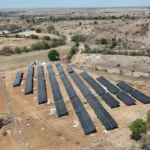
One of the flagship projects under the Racc initiative is a partnership with Enel North America, which supports the development of three new solar energy projects in Texas.
The projects are expected to generate approximately 1.8 terawatt-hours (TWh) of renewable electricity annually, providing clean power for Mars’ facilities and supporting renewable energy access across its value chain.
Commenting on the achievement, Mars CEO Poul Weihrauch said the transition to renewable electricity strengthens business resilience while supporting broader sustainability goals.
He noted that access to clean energy, climate-resilient agriculture, and thriving communities are essential components of building a sustainable and future-ready business.
Mars Exceeds Scope 1 and Scope 2 Emissions Goal
According to the sustainability report, Mars has reduced its Scope 1 and Scope 2 greenhouse gas emissions by 42.6% compared to its 2015 baseline, surpassing its original target of a 42% reduction by 2025.
The company’s emissions reductions were achieved through investments in renewable energy, energy efficiency measures, and operational improvements across its global facilities.
Scope 3 Progress Continues Despite Missing Target
While Mars exceeded its direct emissions goal, the company reported that it did not achieve its Scope 3 emissions target, which covers indirect emissions generated throughout its supply chain.
However, Mars recorded its largest annual value-chain emissions reduction to date, lowering Scope 3 emissions by 6.4% during 2025.
The company’s cumulative value-chain emissions reduction has now reached 16.9% compared to 2015 levels, despite growing its business by approximately 75% during the same period.
The company had previously set a target of reducing value-chain emissions by 27%, a goal established before the launch of its updated Net Zero Roadmap.
Net Zero Roadmap Drives Long-Term Climate Strategy
Mars unveiled its Net Zero Roadmap in 2023, outlining plans to achieve net-zero greenhouse gas emissions by 2050 and cut emissions across its entire value chain by half by 2030.
The roadmap focuses on several key areas:
- Transitioning to renewable energy
- Eliminating deforestation from supply chains
- Expanding regenerative agriculture practices
- Supporting climate-smart farming
- Optimizing logistics and transportation
- Enhancing supply chain sustainability
These initiatives are designed to reduce emissions while strengthening long-term business resilience against climate-related risks.
Climate-Smart Agriculture Projects Expand Globally
Mars also reported significant progress in sustainable agriculture during 2025.
The company now supports approximately 77 climate-smart agriculture projects across 26 countries and 12 crop categories, helping farmers adopt practices that improve productivity, resilience, and environmental performance.
These programs focus on reducing emissions, improving soil health, enhancing biodiversity, and supporting sustainable sourcing throughout Mars’ agricultural supply chains.
Mars Launches $250 Million Sustainability Investment Fund
To further accelerate sustainability innovation, Mars recently launched the Mars Sustainability Investment Fund (MSIF), a new $250 million investment vehicle aimed at supporting companies developing solutions to address critical sustainability challenges.
The fund will focus on emerging technologies and business models that can help improve environmental performance across food systems, agriculture, packaging, energy, and supply chains.
Sustainability Remains Central to Business Strategy
Mars Chief Sustainability Officer Alastair Child emphasized that sustainability is increasingly integrated into how the company plans, invests, and operates.
He noted that achieving meaningful climate progress requires collaboration among businesses, suppliers, governments, NGOs, and local communities to scale solutions across entire value chains.
Outlook
Mars’ achievement of 100% renewable electricity across its U.S. operations represents a major milestone in the company’s journey toward net-zero emissions.
While challenges remain in reducing supply-chain emissions, the company’s progress in renewable energy adoption, climate-smart agriculture, and sustainability investments demonstrates growing momentum toward its long-term climate goals.
As businesses face increasing pressure to reduce carbon emissions and strengthen supply-chain resilience, Mars’ latest sustainability achievements highlight how large corporations are integrating clean energy, sustainable agriculture, and climate innovation into their core business strategies.