

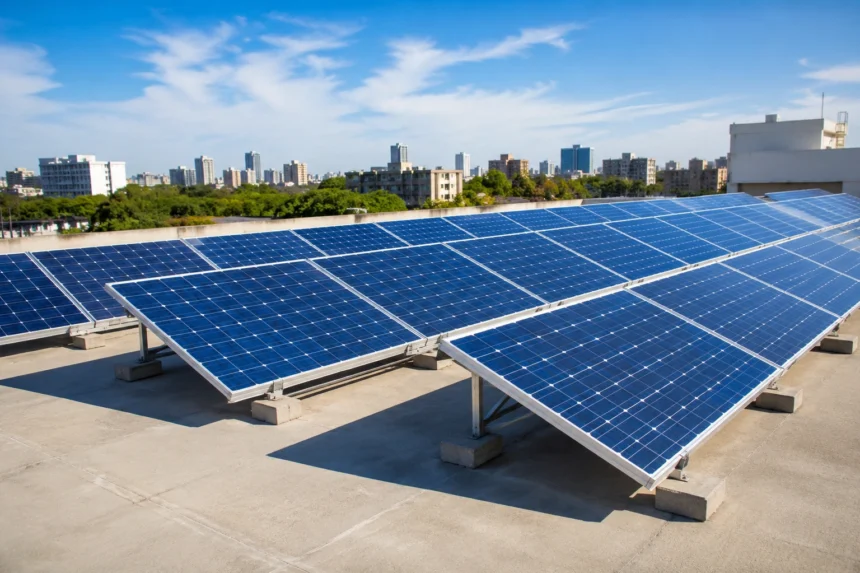
Samvardhana Motherson International Limited (Motherson) has commissioned its first captive solar power project in Uttar Pradesh, marking a significant milestone in the company’s renewable energy journey and industrial decarbonization strategy.
- Solar Plant to Power Manufacturing Operations
- Renewable Energy Becoming Critical for Manufacturing
- Partnership with Renewable Energy Specialist ib vogt
- Leadership Highlights Sustainability Commitment
- Supporting Long-Term Energy Competitiveness
- Industrial Decarbonization Gains Momentum in India
- Part of a Broader Energy Transition Roadmap
- Strengthening India’s Corporate Renewable Energy Movement
Developed through its energy-focused subsidiary Motherson New Energy Limited (MNEL) and executed via Onega Solar Private Limited, the project features a 15 MWp ground-mounted solar power plant located in Mahoba, Uttar Pradesh. The facility will supply renewable electricity to multiple Motherson manufacturing plants across the state, helping the automotive components giant reduce its carbon footprint while improving long-term energy security.
Solar Plant to Power Manufacturing Operations
The newly commissioned project has been developed as a group captive renewable energy facility, enabling Motherson to directly source clean power for its industrial operations.
According to the company, the solar plant is expected to:
- Generate approximately 23.4 GWh (23.4 million units) of renewable electricity annually
- Reduce nearly 17,000 metric tonnes of carbon dioxide emissions every year
- Improve energy cost predictability and operational resilience
- Strengthen access to reliable clean power for manufacturing facilities
The project aligns with India’s broader push toward renewable energy adoption within the industrial sector, which accounts for a significant share of the country’s overall electricity consumption.
Renewable Energy Becoming Critical for Manufacturing
As global manufacturers face increasing pressure to reduce emissions across their operations and supply chains, renewable energy is emerging as a key pillar of corporate sustainability strategies.
For export-oriented manufacturers such as Motherson, decarbonization is becoming increasingly important as international customers and regulators place greater emphasis on sustainability performance and carbon reduction targets.
The commissioning of the solar facility supports Motherson’s efforts to align with evolving global environmental standards while reducing dependence on conventional energy sources.
Partnership with Renewable Energy Specialist ib vogt
The project was developed in collaboration with ib vogt, a globally recognized renewable energy developer with extensive experience in solar power infrastructure.
ib vogt supported the project through multiple stages, including:
- Land acquisition
- Regulatory approvals
- Technical design
- Engineering, Procurement, and Construction (EPC) execution
The partnership highlights the growing role of specialized renewable energy developers in accelerating industrial clean energy adoption across India.
Leadership Highlights Sustainability Commitment
Commenting on the commissioning, Laksh Vaaman Sehgal, Vice Chairman of Motherson Group, emphasized the company’s long-term commitment to sustainable growth.
He stated that sustainability remains a core element of Motherson’s value creation strategy and that the solar project strengthens both energy resilience and environmental performance across its operations.
The initiative represents an important step toward building future-ready manufacturing facilities powered by cleaner and more sustainable energy sources.
Supporting Long-Term Energy Competitiveness
Kunal Vohra, Chief Operating Officer of the Energy Business at Motherson Group, noted that access to affordable renewable energy is becoming increasingly important for global manufacturing operations.
According to Vohra, the project lays the foundation for expanding Motherson’s renewable energy portfolio while supporting:
- Energy security
- Operational resilience
- Sustainability targets
- Long-term cost competitiveness
As renewable energy costs continue to decline, captive solar projects are increasingly viewed as a strategic investment for energy-intensive industries.
Industrial Decarbonization Gains Momentum in India
India’s manufacturing sector is witnessing growing adoption of captive renewable energy projects as companies seek to reduce emissions while managing rising energy costs.
The country’s renewable energy capacity has already crossed 150 GW of installed solar power capacity, making India one of the world’s fastest-growing clean energy markets.
Large industrial consumers are increasingly investing in captive solar and wind projects to meet sustainability commitments, improve energy independence, and support corporate net-zero ambitions.
Part of a Broader Energy Transition Roadmap
The Mahoba solar project forms part of Motherson’s broader clean energy strategy focused on:
- Increasing renewable energy consumption
- Reducing carbon intensity across operations
- Supporting customer decarbonization goals
- Strengthening energy diversification
- Enhancing long-term sustainability performance
The company stated that Motherson New Energy Limited (MNEL) continues to evaluate additional renewable energy opportunities across multiple Indian states as part of its long-term energy transition roadmap.
Strengthening India’s Corporate Renewable Energy Movement
With global supply chains increasingly prioritizing low-carbon manufacturing, investments such as Motherson’s captive solar project demonstrate how industrial companies are integrating sustainability into core business operations.
As renewable energy adoption accelerates across India’s manufacturing landscape, captive solar projects are expected to play a crucial role in supporting industrial decarbonization while contributing to the country’s broader clean energy and climate goals.
The commissioning of the 15 MW solar facility positions Motherson among the growing number of Indian industrial leaders actively investing in renewable energy infrastructure to build more sustainable and resilient operations for the future.